
Hair Loss: Why Billions Are Being Invested and What Can Be Done Today — Dr Anastasios Vekris on Sigma TV
Dr Anastasios Vekris, Plastic Surgeon, President of the FUE Europe Society of Hair Restoration and founder of Advanced Hair Clinics, appeared on the programme “Mesimeri kai kati” on Sigma TV in Cyprus to talk about androgenetic alopecia and about the wave of research that has turned it into one of the most active areas of medical research worldwide. He answered questions from the presenters and from viewers, with the emphasis on what he considers the decisive factor: time.
Why are billions being invested in hair loss?
Asked about the millions being invested in the field, Dr Vekris offered a correction: in reality we are talking about billions. Major pharmaceutical companies around the world are funding research into new treatments, with androgenetic alopecia as the main target.
That interest is not confined to conventional drugs. It is turning towards regenerative approaches — stimulating the body’s own resources at cellular level so that a follicle which has been damaged can recover its function — and, over a longer horizon, towards approaches that, with the help of artificial intelligence, will target the genetic basis of the phenomenon itself.
The size of the affected population explains the investment interest on its own. Around 25-30% of adults develop androgenetic alopecia. To bring that down to a local scale, Dr Vekris gave the example of Cyprus: in a population of roughly one million, the condition concerns about 300,000 people.
It is worth noting that investment interest is not in itself scientific proof. Most of the new treatments being discussed internationally are still in clinical trials and have not been approved either in the United States or in Europe. Waiting for them, therefore, is not a strategy for someone who is losing hair today.
Herbal remedies, lotions and the question of whether you can catch it in time
The next question is one that comes up daily in the clinic as well: when hair starts falling out at a young age, the herbal preparations, the lotions and the promises begin. Is there a way to get ahead of it?
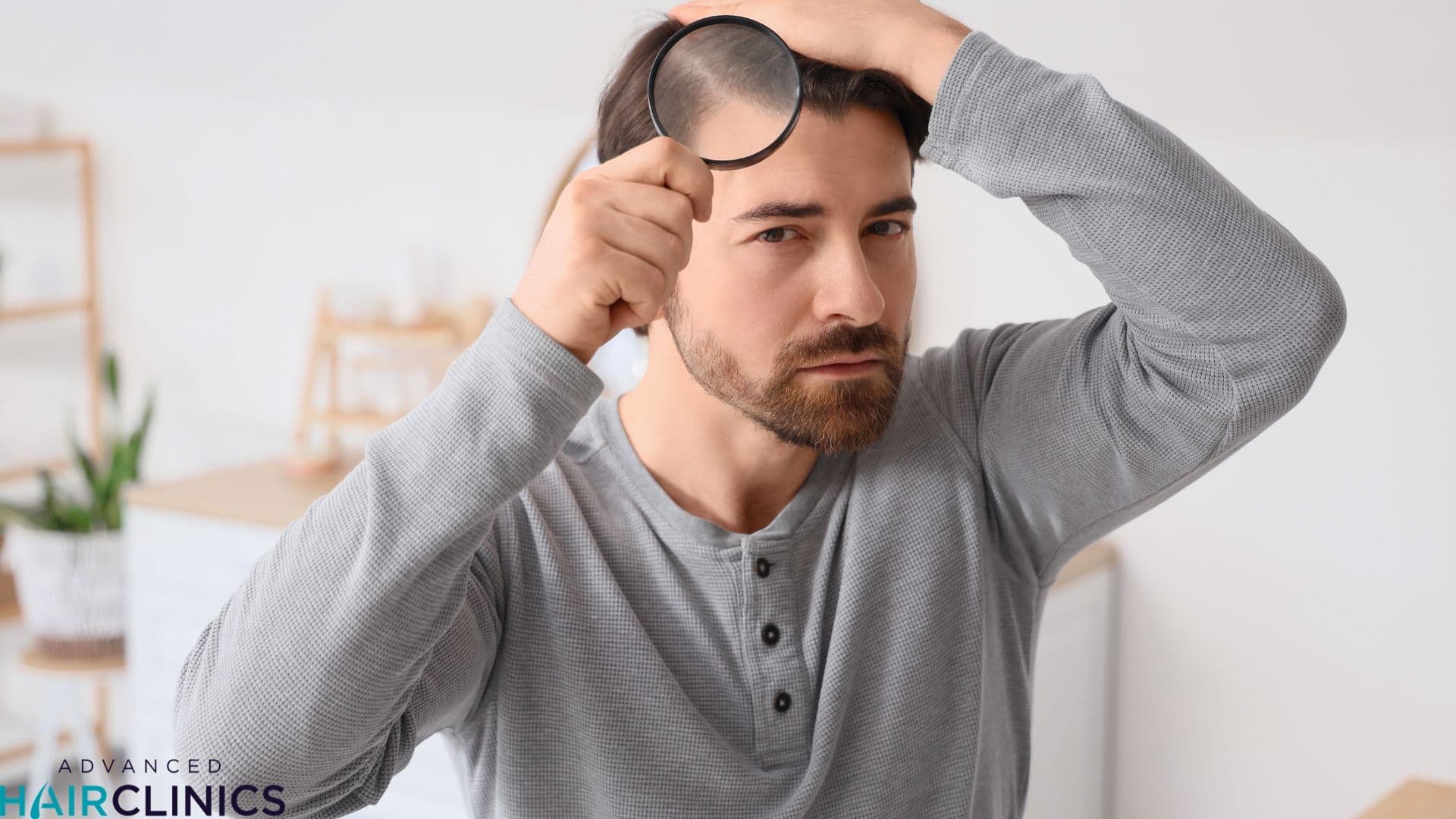
Dr Vekris described the question as pivotal, because it touches the core of modern treatment. The sooner the diagnosis is made — and provided there is still hair in the area, even fine hair that has begun to weaken — the potential for recovery with today’s regenerative treatments is very high. Conversely, when hair loss has been established for years and the follicles have degenerated, conservative treatments do not produce the same results and management moves to the surgical route.
The biology behind this explains why time matters so much. In androgenetic alopecia, follicles do not disappear overnight; they go through a process of miniaturisation. Each growth cycle produces hair that is slightly finer, shorter and lighter in colour, until the follicle stops producing visible hair altogether. While that process is still under way, there is something that can be strengthened. Once it is complete, there is not.

In practical terms, the first signs are not baldness but a change in texture: hair that no longer holds volume, a hairline that recedes discreetly at the temples, a scalp that shows through more in certain light. This is precisely the stage at which most people try shampoos and supplements instead of getting a diagnosis — and it is the stage with the best margins.
The difficult part: it is a chronic condition
One point Dr Vekris insisted on is something that is hard to get across, particularly to younger patients: androgenetic alopecia is a chronic condition and requires long-term treatment. It is not dealt with by a one-off therapy, and it is not solved in a single day.
To the observation that someone may decide to start but lack the stamina to keep going, Dr Vekris agreed. It is perhaps the most common reason an otherwise correct treatment fails. The condition is progressive: stopping treatment means returning to its natural course, regardless of how well the result had been going up to that point.
Two things help here. The first is a realistic timeline: the follicle has its own cycle, so the first objective changes usually register after three to six months, and the meaningful result is judged at one year. The second is documentation: photographs taken under consistent conditions and trichoscopic measurements at the same sites, so that assessment does not rest on the impression of a given day. Without these, patients stop treatment precisely because they cannot see something that is in fact happening.
Can you tell when someone has had a hair transplant?
Asked whether a transplant is noticeable, the answer was categorical. When the procedure is performed by an experienced doctor, in a clinic with a high volume of cases, the result should look natural: the patient should look like himself, as he appeared in photographs a few years earlier.
The FUE method moves follicular units one by one, with no linear scar, following the natural direction, angle and density of the hair in its design. Dr Vekris also mentioned an evolution of the technique that is performed exclusively at their clinic in Cyprus, Long Hair FUE, in which the follicular unit is harvested and implanted while retaining the length of the hair. The practical advantage is that the result can be seen in place from the very first moment, without the area having to be shaved.
In practice, whether a transplant looks obvious comes down to details that do not stand out in a before-and-after photograph: the design of a hairline that is not straight but irregular, as every natural hairline is; the use of single-hair units in the front row and multi-hair units further back; the angle of implantation, which changes from area to area; and the patient’s age in relation to how far the hair loss will progress in the years ahead. A design that ignores the last of these can look flawless at 25 and unnatural at 40.
At 60, is it too late?
A 60-year-old viewer asked whether, having only now started to lose hair, he could still save it. The answer was encouraging but measured: the regenerative capacity of our cells is stronger at younger ages, and a patient of 60 may not have the full capacity he would have had two decades earlier. As long as there is still hair present, however, the prospects are serious.
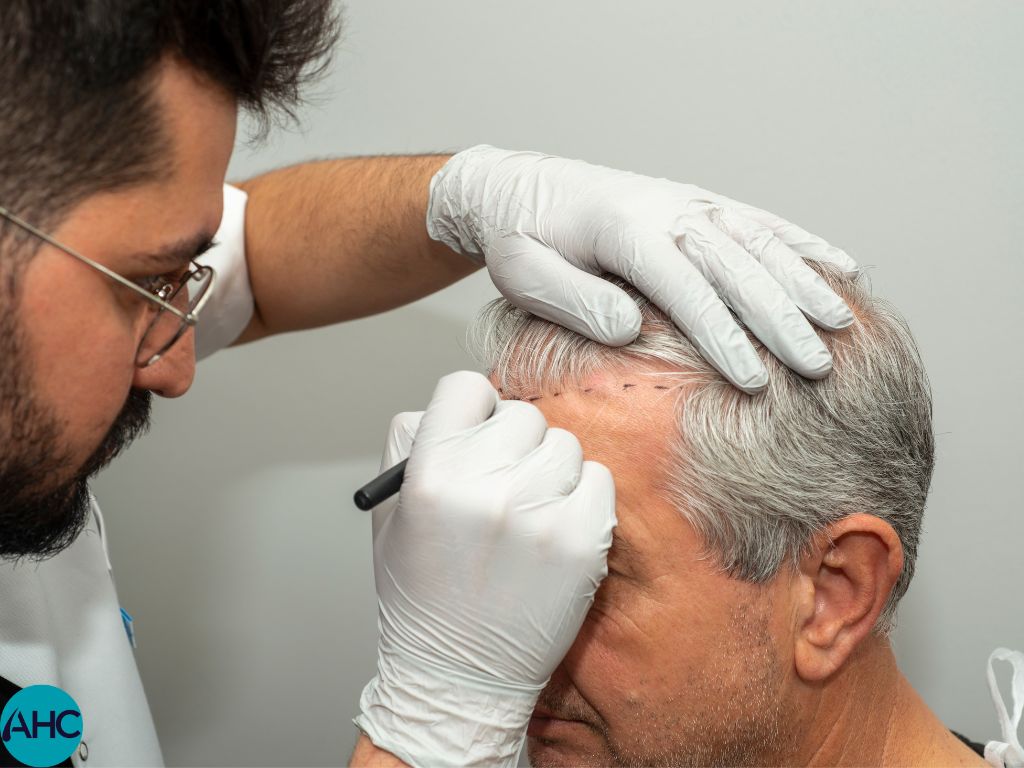
The criterion is not the age on the identity card but the condition of the scalp: what is still there, how far it has miniaturised and how fast it is progressing. That is answered by clinical examination and trichoscopy, not by an assessment from a photograph. In older patients there is in fact an additional benefit to a proper diagnosis: sudden or unusual hair loss after the age of 50 is not always androgenetic and may point to another cause that needs investigating.
Does the same apply to women?
In women, the range of treatments that can be applied effectively is even wider, for a biological reason: complete degeneration of the follicles is rare. A scalp that has emptied entirely is exceptionally uncommon in female hair loss, which usually presents as diffuse thinning with the frontal hairline preserved.
This leaves room for non-surgical treatments aimed at better nourishing and strengthening the follicle, with good results both in younger women of reproductive age and after the menopause, where hormonal change often accelerates the thinning.
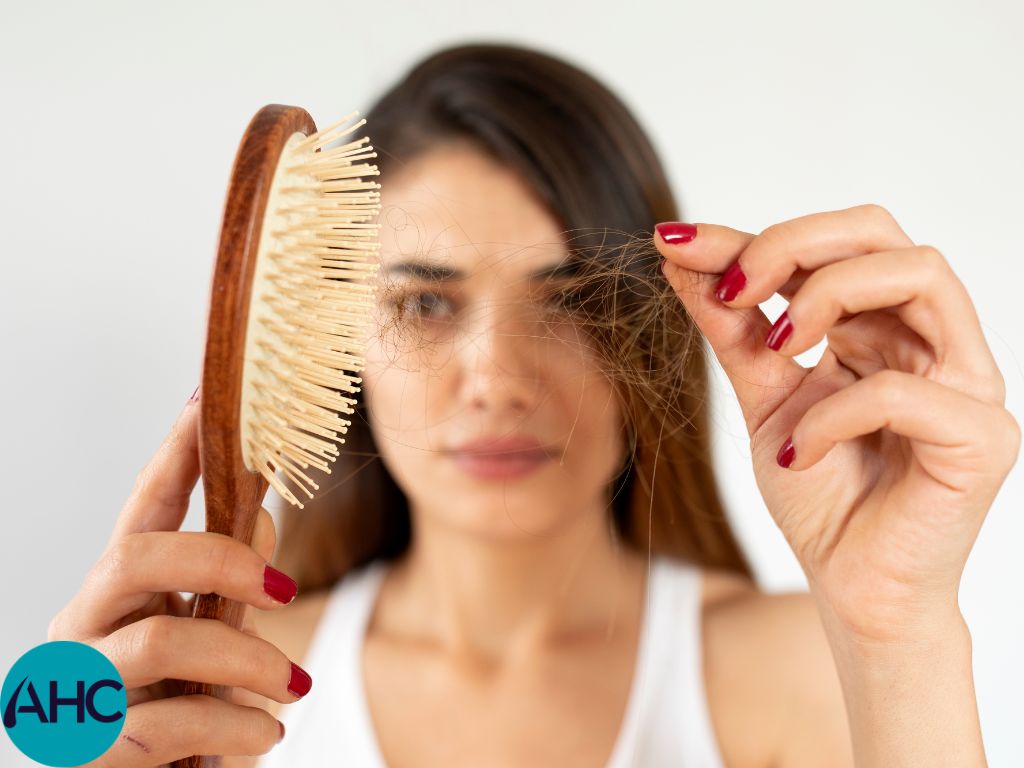
In female hair loss, however, investigating the causes always comes before treatment. Thyroid disorders, iron deficiency, periods of intense stress, childbirth, dietary restriction or changes in medication can all cause or worsen the picture, and often coexist with the androgenetic component. Addressing these factors is part of the treatment, not an optional addition to it.
Why should it concern us, if it comes naturally?
The most interesting question of the programme came from a viewer: why so much worry about something that comes naturally? Dr Vekris answered on two levels, philosophical and medical.
If, as a species, our aim is to address ageing and its consequences, hair loss is part of that discussion. And it is not always a natural progression: if it happened at 80 or 90, we would be talking about the expected degeneration of cells. When it happens at 20 or 30, the consequences are real and specific — psychologically, in appearance and in the age one projects, but also dermatologically.
It was this last point that Dr Vekris dwelt on, noting that he has operated on several cases in which carcinomas developed on the exposed scalp. It is a point that is rarely discussed and it changes the framing: a scalp that becomes exposed receives cumulative solar radiation for decades, without the protection the hair used to provide and usually without sunscreen.
The crown of the head is among the most common sites of non-melanoma skin cancer in men, and it is an area the patient himself never sees. Particularly in countries with the sunshine of Cyprus and Greece, sun protection on the exposed scalp, a hat during peak hours and periodic inspection of the area by someone else are not a matter of appearance.
The next step
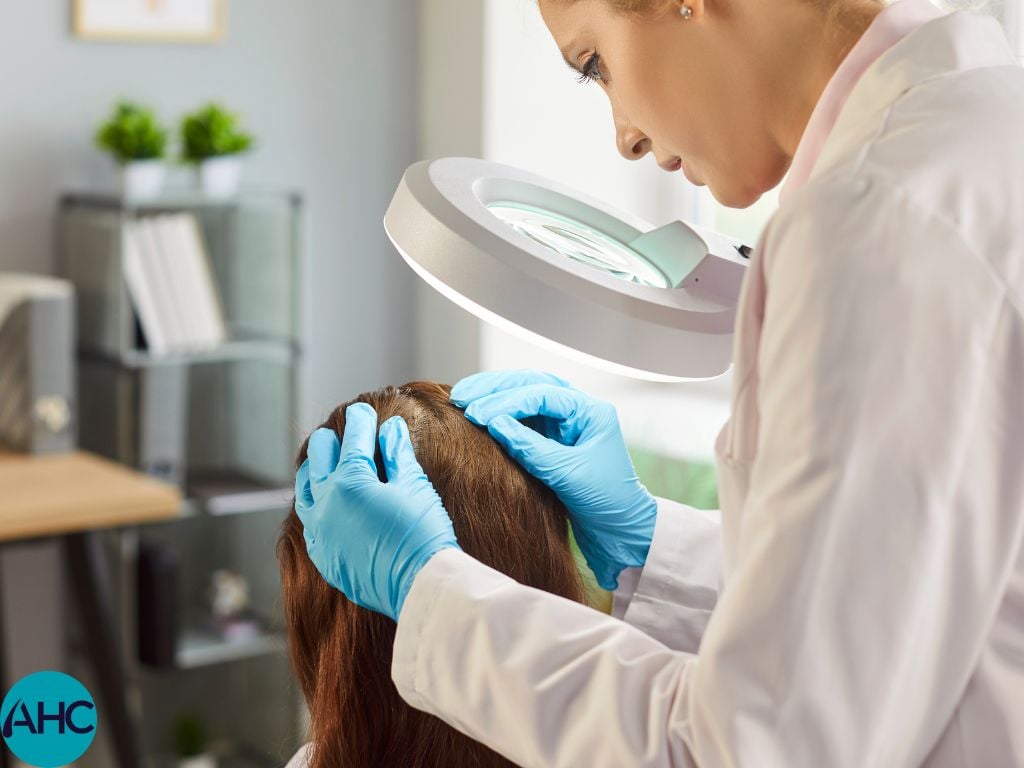
If you notice thinning, a receding hairline or increased shedding, the right move is not to look for a product but to get an assessment. At Advanced Hair Clinics, in Greece and Cyprus, the evaluation includes clinical examination and trichoscopy, in order to determine the type and stage of the hair loss and to design a realistic plan — conservative, surgical, or a combination of the two.
Because, as was heard on the programme, the question is rarely whether something can be done. It is how early it will be done.
The interview with Mr. Vekris on Sigma TV’s “Mesimeri kai Kati” is available here:

Book an Appointment with Our Medical Team
Book an appointment at ADVANCED HAIR CLINICS for a diagnosis and find answers to your questions about hair transplantation.
Contact Form