

The Donor Area in Hair Transplantation: How Many Grafts Can Be Extracted Without Visible Thinning?
How many grafts can be removed from the donor area without causing visible thinning? This is a concern for many patients considering a hair transplant, particularly when hair loss affects a large area of the scalp. The answer depends not only on the number of available grafts but also on hair characteristics, the extent of thinning and the requirements of the procedure.
The donor area supplies the follicular units transferred to areas affected by hair loss. During an FUE hair transplant, grafts are extracted individually and implanted into the recipient area. Because they do not regenerate at their original extraction sites, the available supply must be assessed carefully.
In many cases, scientific estimates suggest that approximately 4,000–6,500 grafts may be used over a person’s lifetime, potentially across more than one procedure. This range is indicative and does not represent a universal limit for every patient. The actual extraction capacity is determined by examining the donor area and assessing the overall pattern of hair loss.
In some cases, more grafts may be available. Modern imaging techniques, such as digital phototrichography, allow a more accurate estimate of the number of grafts available in the donor area.
The Safe Donor Area: What Determines Its Suitability?
Hair transplantation primarily uses follicular units from the occipital and lateral regions of the scalp. Hair in these areas is generally more resistant to androgenetic alopecia and largely retains the characteristics of its original location when moved elsewhere on the scalp.
However, having thick hair at the back of the head does not necessarily mean that the entire area is suitable for extraction. The safe donor area comprises the regions in which hair follicles are most likely to remain stable over the long term.
Its boundaries differ from person to person. Age, family history, the pattern of androgenetic alopecia and signs of hair miniaturisation—that is, progressive thinning and weakening—are all assessed before surgery.
For example, a 28-year-old man may have dense hair in the occipital region but show early signs of thinning along its lower or lateral borders. Although his hair may initially appear satisfactory, the possibility of future progression of alopecia influences the selection of extraction sites.
Mapping the donor area enables the physician to assess hair stability and identify differences between neighbouring zones. Follicular-unit density, hair shaft diameter and follicular-unit composition are also evaluated to provide a more accurate estimate of the available graft supply.
At Advanced Hair Clinics, the preoperative assessment is supported by clinical measurements, digital analysis and trichoscopy. These techniques allow the measurement of hair density and shaft diameter, as well as the recording of follicular units and the number of hairs they contain.
These findings complement the clinical examination by providing information that cannot always be determined through visual inspection alone. Detailed documentation of donor-area characteristics helps identify appropriate extraction zones and estimate the available density.
How Many Grafts Can Be Extracted From the Donor Area?
There is no single number of grafts that can be safely extracted from every donor area. Extraction capacity depends on the area’s total surface, initial density, hair shaft diameter and the density that must be preserved after the procedure.
Equally important is the proportion of follicular units that can be removed from a given area without noticeably changing its appearance. A larger donor zone may offer greater possibilities than a smaller one, even when the density per square centimetre is similar.
At Advanced Hair Clinics, conventional FUE may be performed in sessions involving approximately 2,000–4,000 grafts when donor-area characteristics and the needs of the recipient area permit. The number selected for each operation is determined by the surgical plan, rather than by a goal of extracting as many as possible.
Consider two hypothetical patients who each need 3,000 grafts to restore areas of thinning.
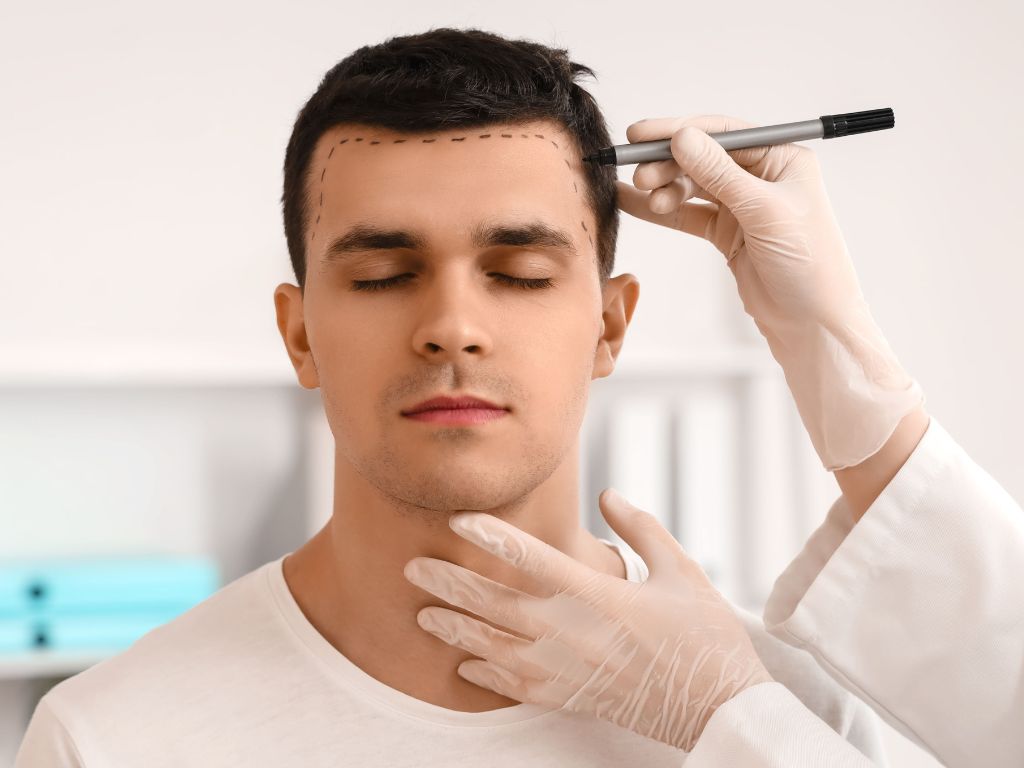
The first has a large, stable donor zone, high density and relatively thick hair. The second has a smaller stable area, finer hair and lower density. Although their needs in the recipient area are the same, their extraction capacities differ.
For the first patient, extracting 3,000 grafts may be feasible without a particularly noticeable reduction in density. For the second, the same number may account for a larger proportion of the available grafts and therefore require a different approach.
The surgeon may therefore recommend fewer grafts, a different distribution within the recipient area or a staged restoration. The decision concerns both the coverage that can be achieved and the appearance of the donor area after extraction.
This assessment cannot be reduced to a single number. Two patients with similar density may have donor zones of different sizes or different follicular-unit compositions, which can substantially affect their surgical options.
Why Density, Hair Thickness and Follicular-Unit Composition Matter
One graft corresponds to a naturally occurring follicular unit, which usually contains one to four hairs. Therefore, 3,000 grafts do not necessarily correspond to 3,000 individual hairs. The total number of hairs transferred depends on the composition of the units extracted.
A donor area with a high proportion of two- and three-hair units can provide more hairs with fewer extractions. Conversely, where single-hair units predominate, achieving comparable visual coverage may require extracting a greater number of grafts.
Unit composition also influences implantation sites. Single-hair units are often placed at the leading edge of the hairline, where a subtle, natural transition is needed. Multi-hair units are generally used farther behind the frontal line to improve the appearance of density. Their precise distribution is tailored to the patient’s hair characteristics and surgical plan.
Hair shaft diameter also plays a decisive role. Thicker hairs usually provide greater visual coverage, while wavy or curly hair can create more volume than very fine, straight hair. The colour contrast between the hair and scalp also influences how easily thinning can be seen.
As a result, two patients receiving the same number of grafts may have very different apparent densities. Coverage can appear fuller in someone with thick, wavy hair and little contrast between hair and skin than in someone with very fine, straight hair.
It is also important to distinguish hair density from follicular-unit density. Measurements expressed as hairs/cm² and grafts/cm² do not describe exactly the same characteristic.
For example, an area containing 70 follicular units per cm² may have different numbers of hairs depending on the proportion of single-, double- and triple-hair units. This distinction matters both when assessing the donor area and when estimating the coverage that can be achieved.
A digital graft calculator can provide an initial estimate of the recipient area’s requirements. However, it cannot accurately capture all the characteristics described above or replace a clinical examination. Any calculated graft count must therefore be interpreted in light of the scalp’s actual characteristics.
Overharvesting: The Consequences of Excessive Graft Extraction
The term overharvesting refers to removing so many grafts from the donor area that the density of the remaining hair may be visibly affected. It occurs when the number of units removed exceeds what a particular donor zone can safely provide.
Overharvesting does not depend solely on the total number of grafts removed. It can also result from concentrating too many extractions in a limited area, even when the overall number is not especially high.
In such cases, differences in density may appear between neighbouring scalp areas. This uneven appearance is often more noticeable with short hairstyles, when the hair provides less coverage of the skin.
A key advantage of the FUE method is that grafts are extracted individually, without the linear scar associated with the FUT technique. Careful selection of extraction sites and even distribution of extractions help preserve the donor area’s natural appearance and reduce the risk of visible changes in density.
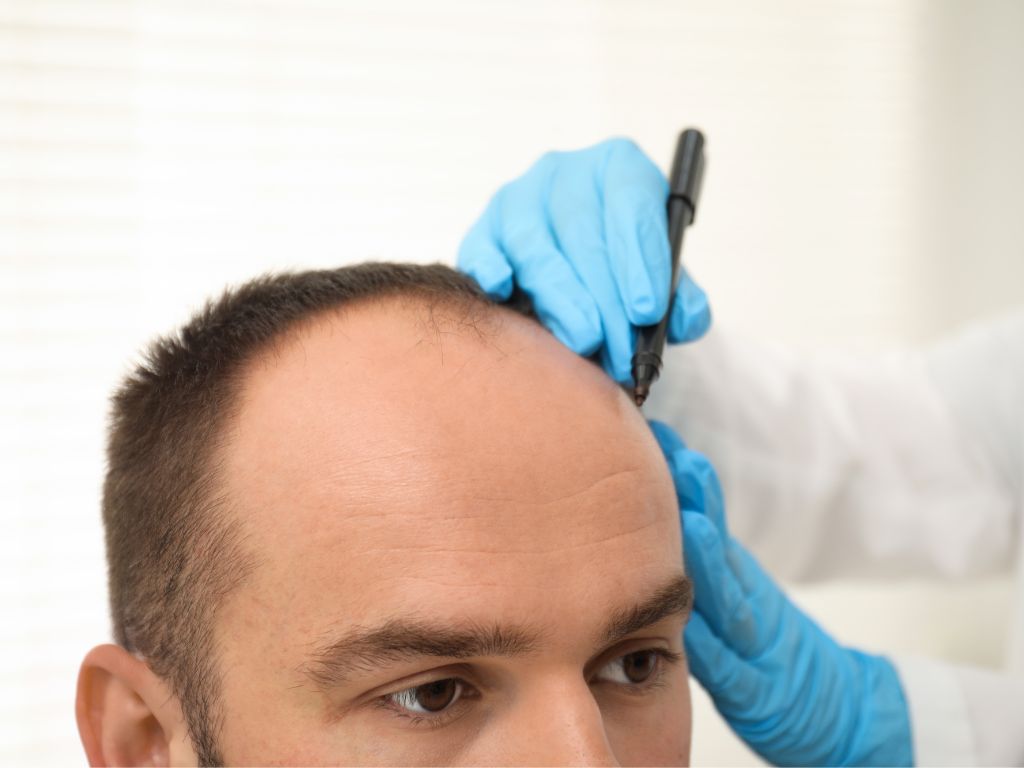
The spacing between extraction sites is one of the parameters considered during the procedure. The surgeon takes local density into account to avoid an excessive concentration of extractions at particular points. The distribution may differ between the occipital and lateral regions according to hair characteristics.
It is particularly important to identify areas showing signs of hair miniaturisation. Extraction from zones that may be affected by progressive androgenetic alopecia requires careful evaluation, because the long-term stability of those follicles may differ.
Appropriate donor-area management allows the surgeon to plan extractions according to the available density and scalp morphology. In this way, restoration of the recipient area can be balanced against preserving the most uniform possible appearance at the extraction sites.
Preserving Grafts for Future Transplants
Androgenetic alopecia is progressive. Although a transplant can restore coverage where new grafts have been implanted, hair loss may continue in the remaining natural hair.
This is especially important for patients undergoing their first transplant at a young age. The pattern of hair loss at 25 or 30 does not necessarily indicate how extensive it may become several years later.
Hairline design must therefore take the future progression of alopecia into account. A very low or unusually dense frontal hairline can require a large number of grafts, limiting options for covering other areas at a later stage.
For instance, a patient may want the temples fully restored and a very low hairline while thinning elsewhere remains limited. If there is a risk that the mid-scalp or crown will be affected in the future, however, the choice of frontal hairline must be considered with that possibility in mind.
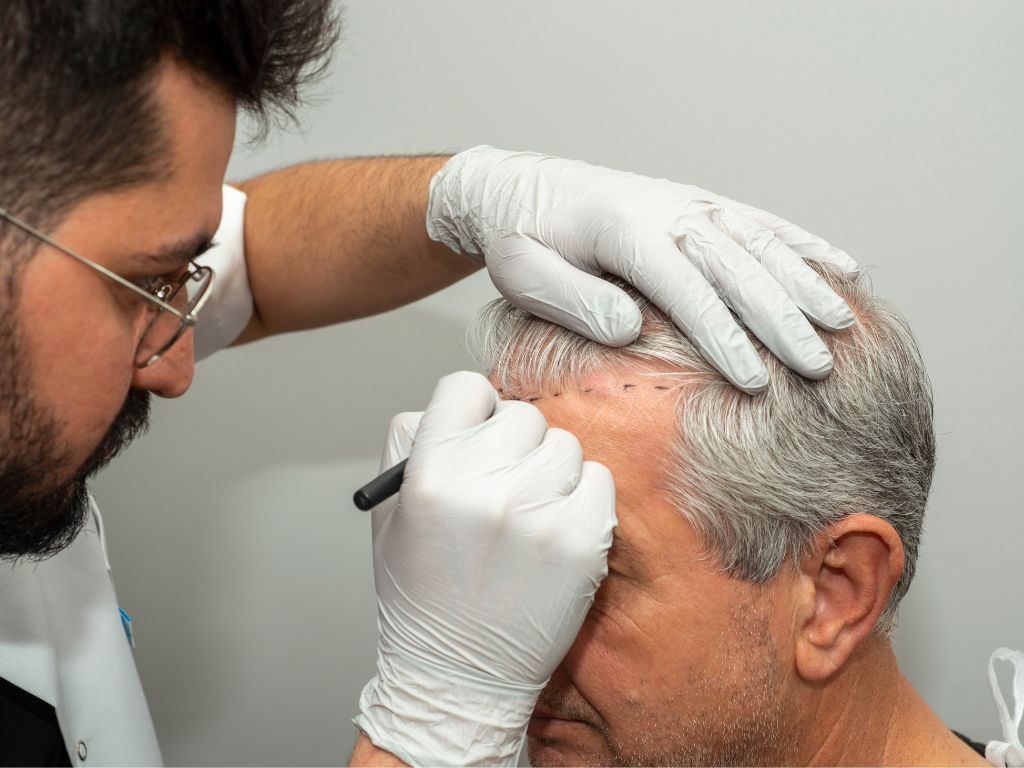
In advanced alopecia, the available graft supply may not be sufficient to achieve high density across the entire scalp. Prioritising the areas to be treated then becomes especially important.
The frontal area and hairline have a major effect on the overall appearance of the face. The crown, by contrast, can require many grafts because of its size and the distinctive direction in which hair grows there.
For some patients, prioritising the frontal area may produce a more satisfying visual improvement than attempting to cover the entire scalp uniformly. For others, different priorities may be appropriate, depending on the extent of thinning and their expectations.
The possibility of a second transplant does not mean that every patient will necessarily need another operation. It is nevertheless worth discussing from the outset, particularly when hair loss is still progressing.
Beard and Body Hair as Additional Donor Sources
In selected cases of extensive alopecia, when the scalp donor area is insufficient, grafts from the beard or other parts of the body may be used as supplementary donor sources.
These hairs differ from scalp hair in thickness, texture and growth cycle. Beard hairs, for example, are often thicker and can provide additional coverage in appropriately selected areas.
They are not, however, an equivalent substitute for scalp grafts. Particular care is needed at the hairline, where finer, mainly single-hair units are important for a natural result.
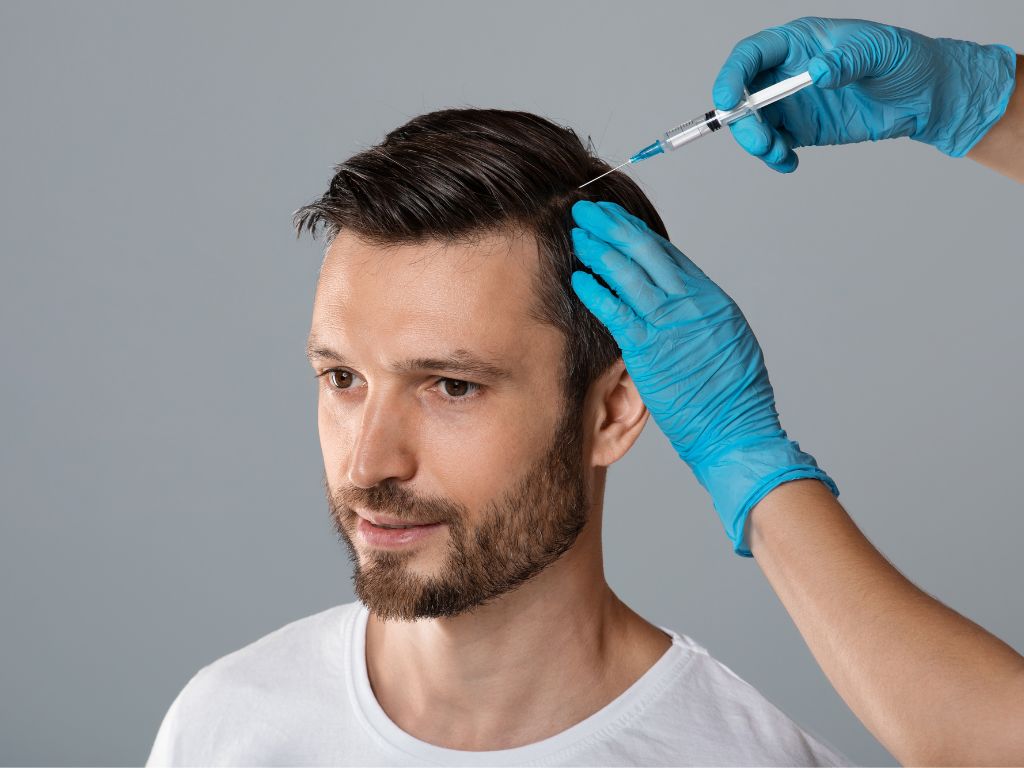
The choice of implantation site depends on hair texture and how naturally the transplanted hairs can blend with existing hair. In some cases, beard grafts can be combined with scalp grafts to improve coverage without creating obvious differences in appearance.
The surgeon also assesses the quality of the alternative donor site, the availability of suitable grafts and differences in their growth cycles. These factors influence both which units are selected and where they can be used.
The use of body hair is therefore an additional option for specific cases, rather than an approach that is applied in the same way to every transplant.
Individualised Transplant Planning and Donor-Area Assessment
Surgical planning involves more than deciding how many grafts to use. Before the procedure, the team must determine which areas will receive coverage, the desired density and the shape of the frontal hairline.
Hairline position, for example, is not determined solely by a patient’s wish for a lower frontal line. Facial proportions, age, the pattern of hair loss and the possibility of achieving a natural result must all be considered.
The direction in which the hairs are implanted also matters. At the front, the correct growth direction and angle contribute to a natural-looking hairline. At the crown, where hair often forms a characteristic spiral, the plan should follow the existing growth pattern.
The follicular units chosen for each site depend on the desired result. Single-hair and multi-hair units serve different purposes, and placing them in different zones can have a significant effect on perceived density.
For example, a transplant of 2,800 grafts may achieve a better aesthetic result than one involving 4,000 grafts when the choice of areas and distribution of units are better matched to the patient’s actual needs. Graft count is therefore only one element of the overall plan.
At Advanced Hair Clinics, preoperative assessment aims to develop an individualised plan based on donor-area characteristics and the possibilities for restoring the recipient area.
During the consultation, the patient can learn what level of coverage is achievable, which areas will receive priority and what options remain if hair loss progresses in the future.
This information helps establish realistic expectations and explains the decisions made before transplantation.
The success of a hair transplant is not judged solely by how many grafts are used, but by how they are used. Careful donor-area selection, recipient-area planning and correct graft placement are essential to a natural, aesthetically balanced result.
Book an Appointment with Our Medical Team
Book an appointment at ADVANCED HAIR CLINICS for a diagnosis and find answers to your questions about hair transplantation.
Contact Form