
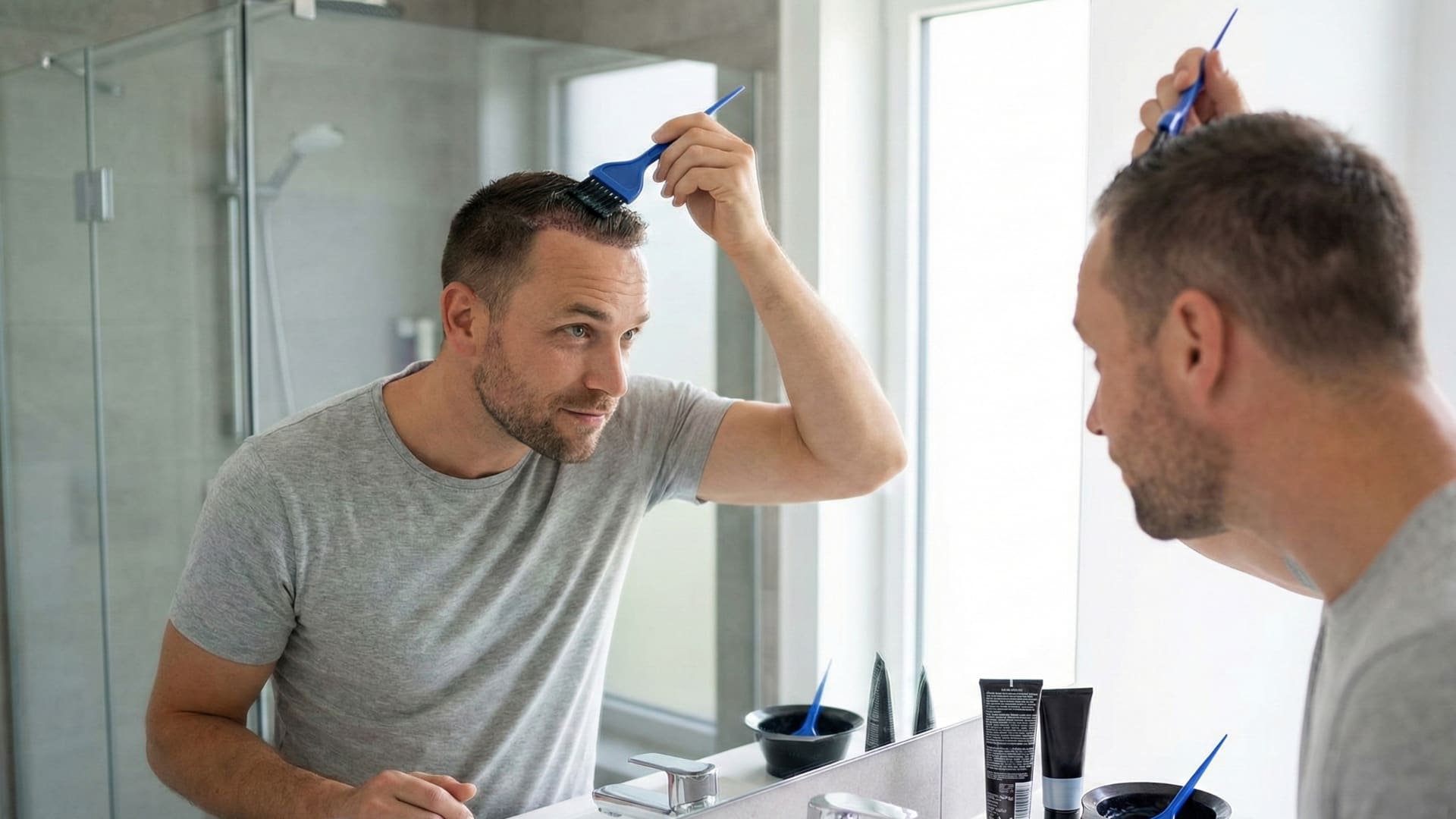
When Can I Dye My Hair After Hair Transplant
One of the most common questions from patients after a hair transplant is when they can dye their hair. The answer, however, is more complex than one might imagine. How long you should wait before dyeing your hair depends on your body’s healing ability, the surgical technique (FUE or FUT), and, most importantly, the chemical composition of the product you will use. Premature exposure to the chemical agents in hair dye can disrupt the complex biological processes necessary for graft stabilization and healthy hair growth and jeopardize the final aesthetic result.
What Is the Healing Process After Surgery
After transplantation, the scalp heals in three different phases. The inflammatory phase, in the first week, begins the healing process. Then, from the 1st to the 3rd week, cellular integration begins, which ensures the formation of new tissue and blood vessels around the hair follicles. Finally, the scalp remodeling phase continues for months until the grafts are fully stabilized, which are usually more resistant to external chemical agents after 3 months.
Why You Need to Wait
During the first 24 hours, the grafts remain in place only with mechanical support from the surrounding tissue, making them vulnerable to any stress. Between the 1st and 3rd day, the body produces fibrin, a protein that stops bleeding and contributes to wound healing. This protein creates a sticky mesh that forms a blood clot covering the wound and helps stabilize the graft.
Between the 7th and 14th day, the grafts become increasingly stable, but the stabilization process is still ongoing. While scabs typically fall off within 5-8 days and redness subsides in 2-4 weeks, this does not mean healing is complete. The full connection of the grafts to the local vascular network to restore blood flow takes approximately 2 months. Only then does the skin begin to become more resistant to external chemical agents. Also, a necessary prerequisite for using dye is that all micro-incisions have closed. But there are other factors explained below that you should consider. The timeline below gives you a general overview of when you can dye your hair.
Timeline – When You Can Dye Your Hair
Month 1 (weeks 0-4): Dyeing is Prohibited
During the first month, the risk of infection, inflammation, folliculitis, and graft loss is high. Your grafts are in the healing phase and trying to connect with the surrounding tissue. Introducing strong chemicals to the scalp will have catastrophic consequences.
Different Areas, Different Timelines
Not all areas of the scalp heal at the same rate. The donor area, from where the hair follicles were removed, heals faster than the recipient area where the grafts were placed.
Donor area: You can dye this area after 4 weeks, but only with mild dyes. The extraction areas are smaller and heal faster, especially if the transplant was performed using the FUE technique. However, if you had a FUT transplant, wait an additional 2-3 weeks.
Recipient area: Wait at least 6-8 weeks before dyeing the transplant area. The new grafts are still vulnerable and require maximum protection.
What to Check Before Dyeing Your Hair
Before dyeing after 4-6 weeks, make sure that:
- All scabs have fallen off naturally
- Redness has subsided
- There is no longer sensitivity or tenderness
- Your surgeon has given explicit approval
Safe Dyeing Options at Weeks 4-6:
Semi-permanent dyes: Choose ammonia-free formulations with low hydrogen peroxide (developer) content, with a concentration of 6% or less. These dyes deposit color on the surface without affecting the hair shaft.
Pure henna: The mildest herbal option, but not completely safe. Read more about this product below.
Prohibited: Products for bleaching or highlights with high peroxide content (30%-40% concentration) create intense oxidative stress.
After 3 Months: Free Choice of Dye
can safely use permanent dyes, highlights, or bleaching products. For FUT patients, the linear scar may require up to six months before applying permanent dye to that area.
Factors That Extend the Dyeing Timeline
- Smoking: Add at least two weeks to each timeline. Nicotine constricts blood vessels and slows healing.
- Diabetes or autoimmune disorders: These patients have reduced healing capacity. More than 10 weeks may be required before dyeing or special dermatological evaluation may be needed.
- Larger transplants: More grafts mean more healing time.
- Complications: Any infection, prolonged inflammation, or delayed healing postpones dyeing until fully resolved.
How Dye Chemicals Damage New Grafts
Hair dyes are complex chemical products designed to penetrate deep into your hair. This is fine for mature hair follicles but potentially catastrophic for healing grafts.
Ammonia or monoethanolamine acts as an alkaline agent, raising the product’s pH to penetrate the hair shaft and allow color lightening by breaking down melanin molecules. It can cause irritant contact dermatitis on recently healed skin, redness, burning sensation, and inflammation.
Hydrogen peroxide creates oxidative stress, producing free radicals that damage cellular structures and slow tissue regeneration. For grafts still developing vascularization, this attack can be devastating.
Hydrogen peroxide can cause oxidative stress. The increase in free radicals it causes can slow fibroblast multiplication and epidermal cell regeneration, resulting in delayed wound healing. Permanent dyes often contain hydrogen peroxide in concentrations ranging from 6% to 9%.
Para-phenylenediamine (PPD) is a potent allergen found in most permanent dyes. When applied to skin with micro-incisions, PPD penetrates more easily, risking severe allergic reactions such as swelling, blisters, and intense inflammation that can endanger graft survival.
The Risk of Folliculitis After Hair Transplant
Post-transplant folliculitis is an inflammatory condition that occurs in 10%-15% of patients. Although usually transient with proper treatment, the chemical irritants in hair dye products can trigger or worsen this condition. Premature dyeing can disrupt graft integration, delay growth, or cause graft loss.
Which Product to Choose
Permanent Dyes
Permanent dyes use ammonia or alkaline substitutes and peroxide to permanently alter your hair’s melanin. Even “ammonia-free” formulas still rely on peroxide. Wait for three months to pass and don’t rush with supposedly “milder” permanent dyes.
Semi-permanent and Temporary Dyes
Semi-permanent dyes deposit color without significantly affecting hair structure because they contain minimal or no peroxide. Temporary dyes simply coat the hair surface without penetrating the epidermis and wash out easily. Both are acceptable after 6 weeks with the consent of your doctor.
The Truth About Henna
Pure henna (Lawsonia inermis) coats the hair with natural pigment without penetrating the epidermis. Some studies suggest antimicrobial properties and potential support for hair growth. However, it is not without risks:
Allergy risk: Even pure henna can cause allergic contact dermatitis. Definitely do a patch test on your skin 48 hours before applying henna, even if you have used it in the past.
Contamination risk: Commercial henna products often contain additives. “Black henna” may contain the allergen PPD in concentrations up to 51% — extremely dangerous for recently healed scalp.
Use only 100% pure henna, test first, and wait 6-8 weeks.
Alternative Solutions
Hair Thickening Fibers for Temporary Coverage
Keratin-based hair thickening fibers, in powder form, adhere to existing hair through static electricity, cover gray roots, and create a fuller hair appearance. Use them 2-4 weeks after surgery when scabs have fallen off naturally. Effective and safe hair thickening fibers, without Parabens, can be found at Advcosmetics.
It is important that application be moderate and skin contact be avoided, so that hair follicles are not clogged, which could lead to irritation or infection.
Scalp Micropigmentation
Scalp micropigmentation (SMP) deposits pigment on the scalp surface to simulate hair follicles and create an appearance of hair density. It complements transplants harmoniously but requires waiting 9-12 months in recipient areas to evaluate the final growth and graft density.
Our Advice
You didn’t invest in a transplant to risk losing grafts because you couldn’t wait a few weeks. Wait as long as possible before applying any hair dye.
The timelines we cite here are based on biological healing mechanisms. However, your timeline may differ depending on your body’s healing capacity, technique, transplant size, and personal health factors. That’s why your doctor’s approval is essential before any hair dyeing.
If you’ve had a hair transplant and something concerns you, get a second opinion. Contact Advanced Hair Clinics for an evaluation. Call from Greece at (+30) 210 6980451 and from Cyprus at (+357) 25251040 or leave your message below and we will respond as soon as possible.
Book an Appointment with Our Medical Team
Book an appointment at ADVANCED HAIR CLINICS for a diagnosis and find answers to your questions about hair transplantation.
Contact Form