
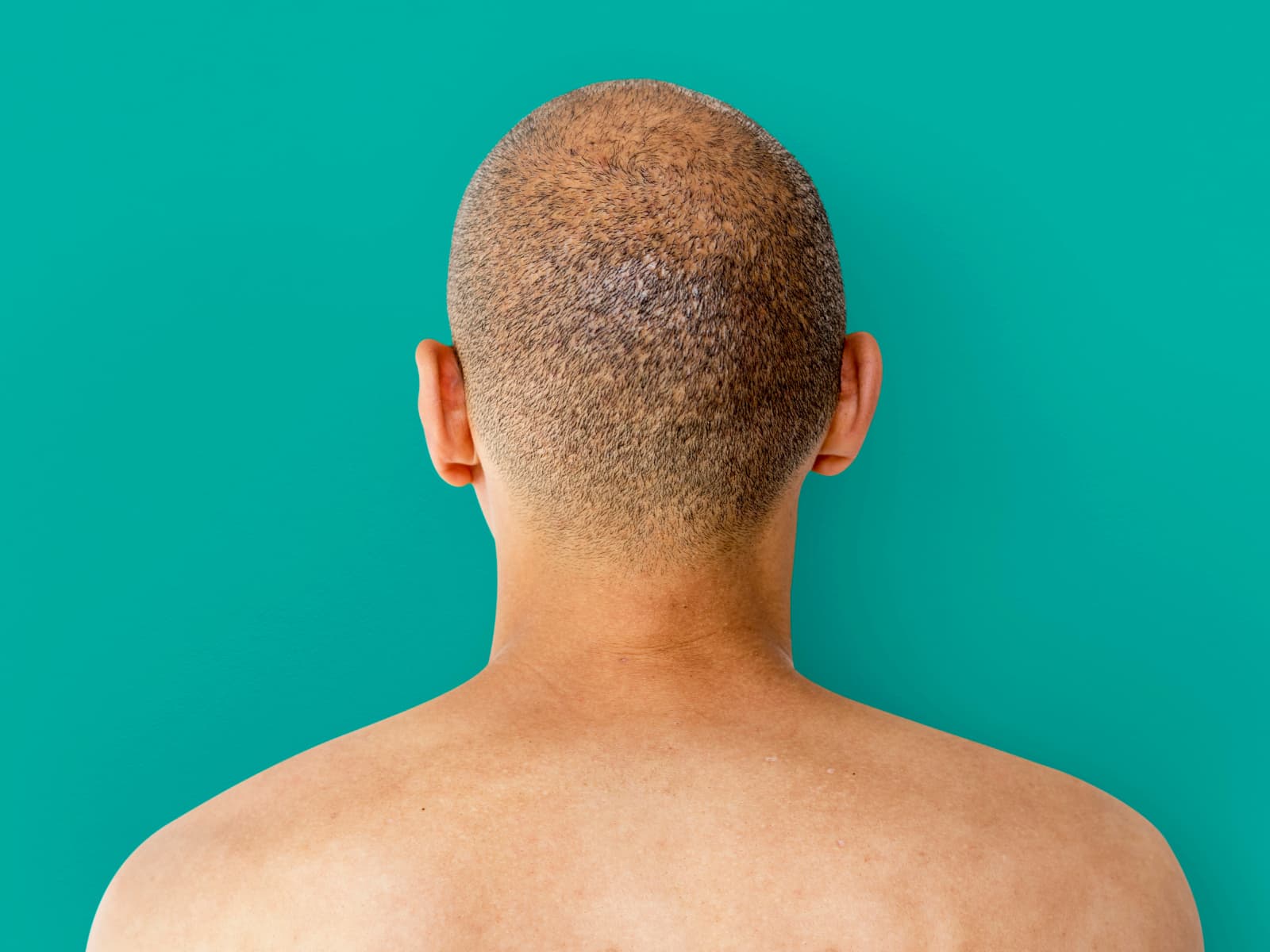
Shock Loss: Hair Shedding After Hair Transplantation
The sudden and significant hair loss after a hair transplant, known as shock loss, is one of the most common yet misunderstood stages of recovery. For many patients, hair loss a few weeks after a hair restoration procedure creates concern or doubt. In reality, shock loss is an expected and transient response of the scalp that does not affect the final outcome of the transplant.
Shock loss is not a side effect of hair transplantation nor an indication of surgical failure. It is a physiological biological response of the hair follicles to surgical stress.
What is shock loss
In medical terminology, shock loss is primarily described as a localized form of telogen effluvium, which occurs due to the premature entry of hairs into the resting phase of their life cycle following surgical intervention.
Normally, hairs pass through an active growth phase (anagen), a brief transitional phase (catagen), and then into a resting phase (telogen), before being shed and replaced by new hairs.
In some patients, mechanisms of anagen effluvium also participate, meaning loss of hairs that were still in the active growth phase. This explains why in certain cases hair loss appears earlier or with greater intensity, while the follicles remain intact and healthy.
Shock loss may affect:
- the transplanted hair, which loses the hair shaft,
- the pre-existing natural hair around the transplant area,
- and less commonly, the donor area.
It should be clarified that in the case of shock loss, only the hair shaft is shed. The follicles remain alive beneath the skin and fully retain their ability to produce new hair.
Why shock loss happens
The normal hair life cycle is regulated by blood supply, cellular metabolic activity, and local conditions of the scalp. After transplantation, this cycle is temporarily disrupted by the following factors:
Surgical microtrauma
Even with the most advanced FUE technique, microscopic incisions are created and the follicles are temporarily disconnected from their vascular network. This inevitable surgical stress causes some follicles to enter the resting phase prematurely.
Physiological response to surgical stress
Post-operative inflammation, changes in microcirculation, and the healing process temporarily inhibit active hair growth in both transplanted and neighboring follicles.
Vulnerability of existing hair
Already thin or weakened hairs, particularly in patients with advanced androgenetic alopecia, are more vulnerable to shock loss compared to healthy terminal hairs.
When it typically appears
The timeline of shock loss is relatively predictable:
- onset is typically observed 2 to 4 weeks after the procedure,
- maximum shedding occurs between the 4th and 8th week,
- and the condition gradually subsides within 2 to 3 months.
During this period, hair density appears temporarily reduced, making this recovery stage psychologically challenging.
Do all patients experience shock loss?
Not all patients, but the phenomenon is quite common. It is observed more frequently:
- in women,
- in patients with extensive hair thinning,
- and in larger transplant sessions.
How surgical technique affects shock loss
FUE is minimally invasive, with minimal hair loss and fast recovery, while FUT is more invasive and beyond the recipient area, it also appears in the donor area above and below the strip incision that has been removed.
It is common in clinics for implantation to be performed with pre-created incisions in the scalp and in a second stage their implantation with blunt-tip devices (dull implanters), to speed up the process. However, this means that wounds remain open for a considerable time, resulting in blood clotting, hole shrinkage, and release of inflammatory cytokines, which affect regrowth.
At Advanced Hair Clinics, the FUE procedure is performed with micro implantation devices with a sharp tip less than one millimeter (sharp implanters), which provide high precision during placement, with minimal tissue trauma. The extraction and placement of grafts with this micro device is done without pre-creating holes directly in one stage (direct implantation), which significantly limits surgical stress and consequently the duration and severity of shock loss.
However, the use of sharp implanters requires an extremely high level of specialization and experience from both the physician and the support staff, which is why it is applied in a limited number of clinics.
When hair regrows
Hair regrowth follows this timeline:
- at 3-4 months growth begins,
- at 4-6 months improvement in density is observed,
- at 6-9 months the aesthetic result becomes clearly visible,
- and at 12-18 months the final result is complete.
This process requires time and cannot be accelerated without affecting the quality and maturation of the hair.
Managing shock loss
Medical follow-up after transplantation enhances the natural healing process. During shock loss, the following treatments help facilitate a smoother restart of the hair growth cycle.
- topical minoxidil, at an appropriate time after the procedure, aimed at supporting the restart of the growth cycle,
- finasteride, in selected patients, for stabilization of pre-existing hair affected by androgenetic factors,
- PRP therapy, in specific cases, as a supportive measure for healing and local microcirculation,
- as well as strict adherence to post-operative instructions, which is the most decisive factor for smooth recovery.
Shock loss, although medically expected, often affects psychology. As physicians, we must inform the patient before the procedure so they know it is a physiological part of recovery and not a problem.

When to contact your doctor
If hair loss persists or worsens after three months, or is accompanied by severe inflammation, pain, or signs of infection, it is essential to inform your doctor for an evaluation.
If you are interested in hair transplantation or have already had a procedure and something concerns you, contact Advanced Hair Clinics for a diagnostic evaluation and personalized treatment options that meet your needs. Call from Greece at (+30) 210 6980451 and from Cyprus at (+357) 25251040 or leave your message below and we will respond as soon as possible.
Book an Appointment with Our Medical Team
Book an appointment at ADVANCED HAIR CLINICS for a diagnosis and find answers to your questions about hair transplantation.
Contact Form