
Postpartum Hair Loss in Women: When Is It Normal?
There are periods in a woman’s life that seem to hold every emotion at once. Pregnancy and the birth of a child are undoubtedly among them. Joy, emotion, fear, and a faint anxiety about everything that is changing.
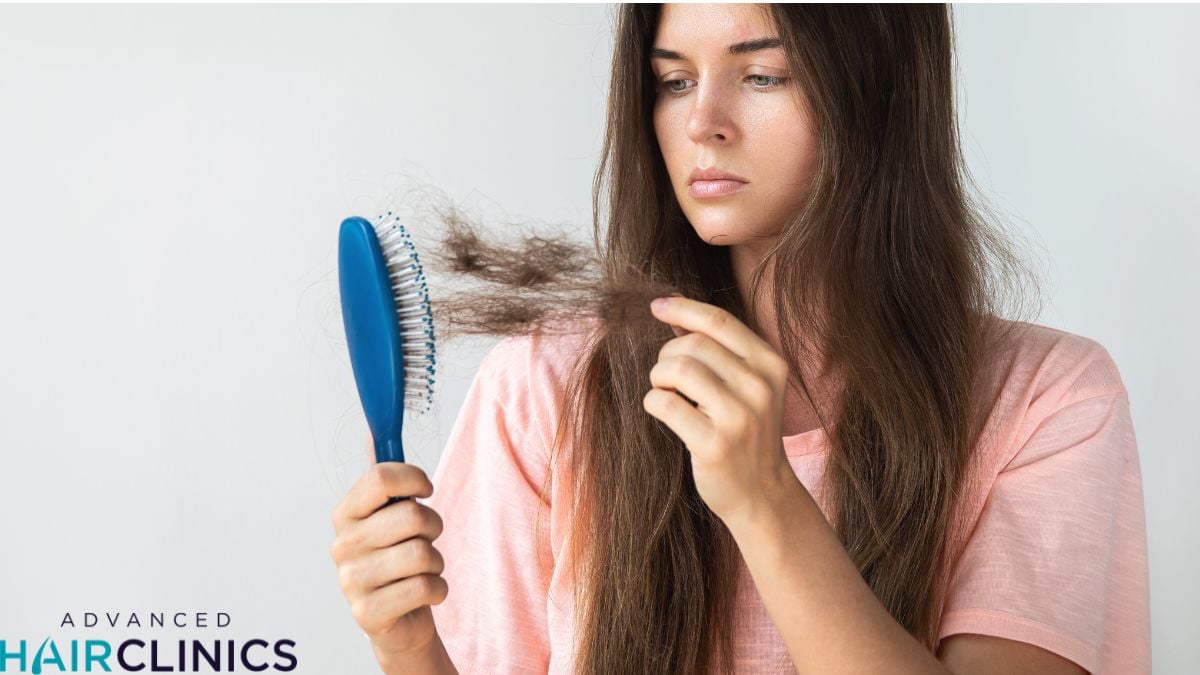
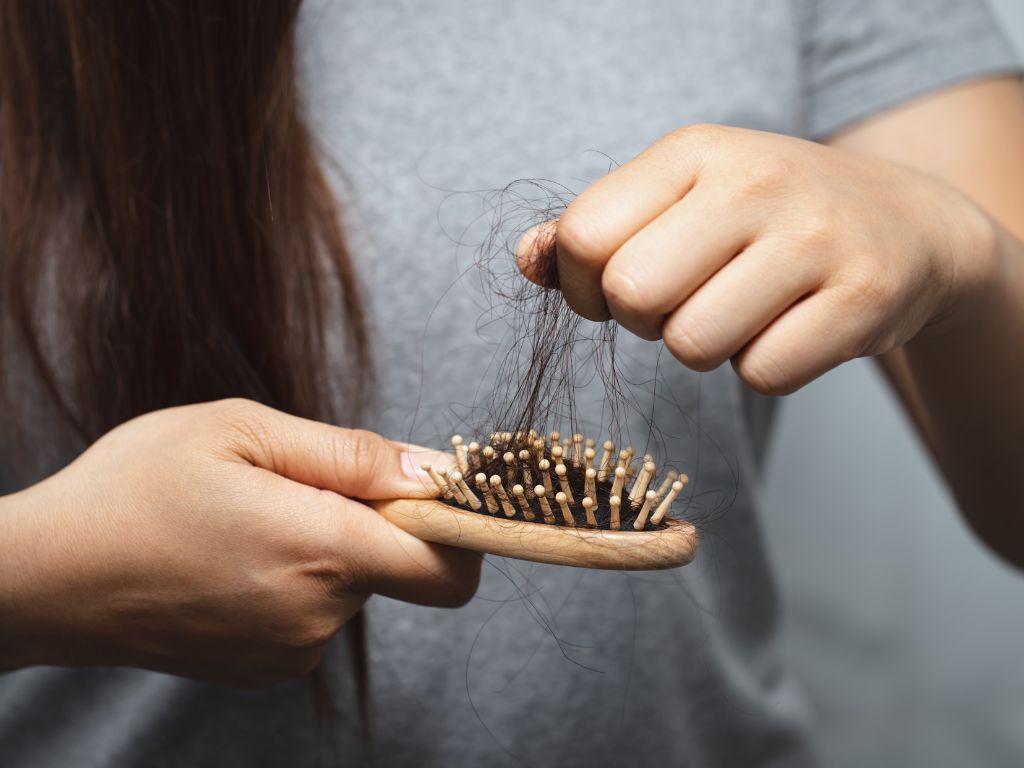
At the same time, the body is trying to recover from an enormous biological shift. Hormones change, the body’s demands increase, sleep is disrupted, and personal care inevitably takes a back seat. And then, usually not immediately but some months after delivery, something may happen that takes many new mothers by surprise: the brush fills with hair, more of it stays behind in the shower, and the ponytail suddenly looks thinner.
Postpartum hair loss is, in most cases, a temporary change in the hair cycle. That it is often normal, however, does not mean that every instance of heavy shedding after childbirth should be put down to hormones and left unexamined.
Why does hair fall out after pregnancy?
To understand postpartum hair loss, we first have to go back to pregnancy itself.
During gestation, raised estrogen levels keep more hair follicles in the growth phase, known as anagen. In simple terms, fewer hairs enter the phase in which they would normally be shed. This is why so many women remember pregnancy as the time their hair was at its fullest and seemed to “hold” better.

After delivery, the hormonal environment changes abruptly. Hairs that had stayed in the growth phase for longer move in a synchronized way into the resting phase, known as telogen, and are then shed. The result looks strikingly sudden, without this meaning that the follicles are destroyed: a larger number of hairs than usual reach the end of their cycle at almost the same time. The phenomenon is called telogen effluvium.
Why doesn’t the shedding start straight after the birth?
The loss usually becomes noticeable two to four months after delivery and peaks around the fourth or fifth month. The reason lies in the hair cycle itself: weeks pass between the moment the follicle changes phase and the moment the hair is actually shed.
This creates a gap in time between the cause and the visible effect. The first months may go by without any sign at all, and the shedding may appear just when pregnancy already feels distant which is why so many women experience it as sudden.
This delay is expected and does not in itself point to anything pathological.
What does it look like when it is normal?
Typical postpartum hair loss is diffuse. The hair does not disappear from one particular area; the overall volume decreases. More hairs in the brush, in your hands while washing, on the pillow, on your clothes. In women with long, thick hair, the picture often looks far more dramatic than the actual change in density.
The scalp itself stays healthy. Telogen effluvium does not, on its own, cause redness, rash, scarring or smooth patches without hair. Heavy shedding does not mean the follicles are being lost permanently.
As the cycle recovers, short new hairs appear, particularly near the frontal hairline and the temples. This is the most reliable sign that the follicles are working again.
How long can it last?
Most women expect a day when the hair will stop falling and everything will go back to normal. It does not work that way. The shedding stops first, the appearance lags behind, and in between lies a stretch of time nobody has warned you about.
The reason is mundane: hair grows about one centimeter a month. The follicle may have been working normally for weeks, but the new hair is still a millimeter long. It has no length to cover, to show, to count toward volume.
This is why the sentence heard more often than any other is “it stopped falling out, but I can’t see any difference.” It is not a sign that something has gone wrong. It is simply the in-between.
According to the American Academy of Dermatology, the heavy phase peaks around four months after delivery, while most women see their density approaching normal again somewhere around their child’s first birthday — a year that, while you are living it, feels endless.
What is worth watching is not how many hairs are left in the brush today. It is whether, compared with three months ago, something is moving in the right direction.
Anxiety, fear and sleeplessness: do they affect the hair?
The period after childbirth brings significant physical and psychological changes. Lack of sleep, adjusting to new demands, breastfeeding, changes in body image and emotional strain all affect the body as a whole.
A distinction is needed here, because no woman needs one more source of guilt. The ordinary anxiety of the postpartum period is not the main cause of postpartum hair loss. You did not lose your hair because you were stressed. The underlying mechanism is tied to the hormonal changes that follow pregnancy, and it would have happened regardless.
Intense or prolonged psychological strain can nevertheless contribute to telogen effluvium. Under conditions of significant stress, a greater number of follicles move prematurely from the growth phase into the resting phase, with the increased shedding appearing weeks or months later.
There is also evidence linking sleep disturbance to various forms of hair loss, although the data are largely observational: a few sleepless nights do not on their own cause hair to fall.
And there is the reverse path, which tends to be underestimated. The hair loss itself becomes a source of anxiety, and a cycle is easily set up in which physical and psychological strain feed one another.
Does breastfeeding cause hair loss?
It is one of the most persistent myths surrounding hair loss after pregnancy.
Breastfeeding is not the cause of postpartum hair loss, and no woman needs to stop it in the expectation that the shedding will stop as a result.
What does matter is that lactation comes with increased energy and nutritional demands. If a restrictive diet, inadequate protein intake, rapid weight loss or some nutritional deficiency is also present, these factors are worth looking at separately.
What else can make the shedding worse?
Childbirth is rarely the only strain of that period. A difficult delivery or cesarean section, significant blood loss, infection or high fever are all recognized physical triggers of telogen effluvium. Often, then, there is no single cause but several aggravating conditions coinciding in time.
Iron and ferritin. Iron deficiency is not the cause of every case of hair loss, but it is one of the factors a doctor investigates in diffuse shedding. A 2026 systematic review and meta-analysis found lower ferritin and vitamin D levels in patients with telogen effluvium compared with control groups, though with considerable heterogeneity between studies. The findings support targeted laboratory testing where there is an indication, not the arbitrary use of supplements.
Thyroid. Postpartum thyroiditis occurs within the first year after delivery and, according to the American NIDDK, affects roughly one in twenty women. What makes it insidious is that its symptoms look dangerously like “normal postpartum life.” Unusually severe fatigue, intolerance to cold or heat, a rapid heartbeat, dry skin, weight changes or difficulty concentrating warrant testing and should not simply be attributed to the exhaustion of motherhood.
Diet and weight. Very restrictive diets aimed at shedding the pregnancy weight quickly, inadequate protein intake, certain changes in medication and prolonged illness also affect the hair growth cycle.
Hairstyles. The tight bun that keeps hair away from the baby’s hands, worn daily for months, exerts constant traction on the most vulnerable zone: around the temples and the frontal hairline. It does not cause hormonal postpartum shedding, but it can add traction alopecia or breakage to hair that has already lost volume. In its early stages it is reversible — if it continues for years, it ends in scarring and becomes permanent.
Can the postpartum period reveal another form of hair loss?
Yes, and it is perhaps the single most important point of the whole subject.
Heavy postpartum shedding can bring to light a pre-existing tendency toward female androgenetic alopecia or traction alopecia that had gone unnoticed until then.
A study titled “Postpartum Telogen Effluvium Unmasking Additional Latent Hair Loss Disorders,” published in 2024 in the Journal of Clinical and Aesthetic Dermatology by researchers at Al-Azhar University in Cairo, examined 200 women presenting with hair loss after childbirth, both clinically and with trichoscopy. Pure telogen effluvium turned out to be the minority of cases; in the great majority it coexisted with another form of alopecia.
Two caveats, so that this is not misread. These were women who sought medical help, that is, a selected population with an existing problem, so the findings do not transfer to new mothers as a whole. And the coexistence of androgenetic alopecia does not mean the postpartum period caused it — it means it made it visible sooner.
The message still holds: the word “postpartum” is not a diagnosis in itself.
Which signs do not fit simple postpartum hair loss?
The distinction is not a matter of quantity. It is a matter of pattern and course.
Assessment by a specialist is needed when:
- The thinning has a clear pattern — the part widens or the crown becomes more visible rather than being diffuse
- Clearly defined, smooth patches without hair appear
- The scalp is uncomfortable: persistent itching, pain, burning, marked redness, significant scaling or changes suggesting scarring
- The shedding worsens instead of settling, or no new hairs appear at all
- Density shows no tendency to recover by roughly one year after delivery
- Systemic symptoms are present, pointing to anemia, a thyroid disorder or another cause
Does every woman need tests?
Not necessarily, and this is worth saying plainly.
A woman with a typical picture, no other symptoms and a clear trend toward improvement mainly needs good information and follow-up. When the loss is heavy, prolonged or accompanied by other findings, however, testing becomes meaningful.
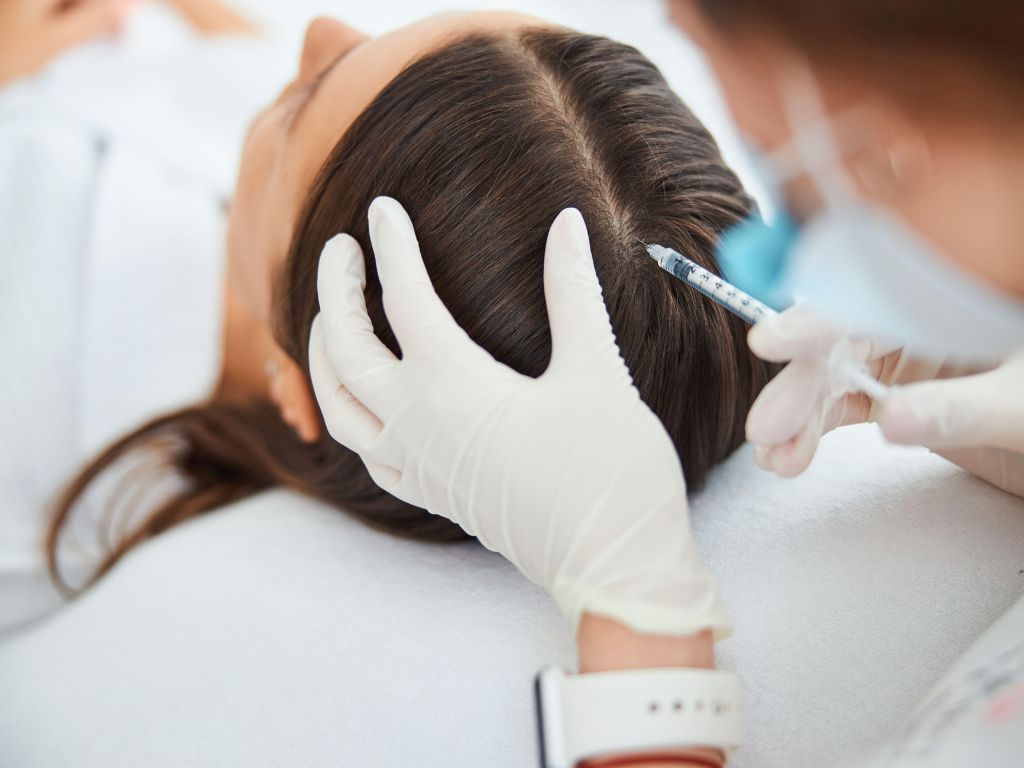
Trichoscopy reveals things invisible to the naked eye: the diameter of the hairs and whether it varies, the number of hairs per follicle, the presence of short growing hairs indicating recovery. These features separate telogen effluvium, where the hair keeps its thickness and the follicle recovers, from androgenetic alopecia, where the hair progressively thins and the follicle shrinks. The difference is decisive, because the two conditions follow entirely different courses and call for entirely different management.
At Advanced Hair Clinics, the assessment rests on medical history, the clinical picture, trichoscopy and, where necessary, targeted laboratory tests. The aim is not for every new mother to work through a long list of tests, but for no two cases to be treated as though they were the same.
The question of supplements
The first thing a new mother hears is “take biotin.” The reality is more complicated.
A review of the literature showed that high-quality data do not support the use of biotin for hair growth in people without an actual deficiency. The American Academy of Dermatology recommends supplements such as iron, biotin or zinc when a corresponding deficiency has been documented, not as a general treatment.
There is something else, rarely mentioned, that carries particular weight here: high doses of biotin distort the results of certain blood tests, including hormone tests and thyroid tests.
Consider the coincidence. A woman with persistent hair loss after childbirth starts taking biotin on her own. A few months later she has her thyroid checked — precisely the test that could identify postpartum thyroiditis. The supplement she took for her hair may cloud the picture.
Good nutrition is essential. Taking supplements blindly is neither a diagnosis nor a treatment.
How to care for your hair until it recovers
When the picture is consistent with normal postpartum telogen effluvium, the most important “treatment” is time and accurate information. There is no shampoo that halts within a few days, a process already underway in the follicular cycle. Gentle care can, however, limit breakage and additional strain.
For a while, avoid very tight hairstyles, excessive heat and frequent chemical treatments. Look after your diet with adequate protein and variety, and resist strict diets for rapid weight loss: they add one more aggravating factor at exactly the wrong moment.
Any medical or specialized treatment is chosen on the basis of a diagnosis and not simply because “there is hair loss.” This matters even more while breastfeeding, where the mother’s safety is not the only criterion: the potential exposure of the infant is taken into account as well.
“Normal” does not mean “don’t look into it”
The period after pregnancy asks your body for time. Time for hormones to settle, for the body’s reserves to be replenished, for sleep to find a rhythm again — and time for the hair cycle to recover.
In the great majority of cases, postpartum hair loss is a passing chapter and not the beginning of permanent loss. That is reassuring, and it is true.
The problem is not the reassuring answer. It is that it is given far too often without anyone having looked at the scalp. Androgenetic alopecia is progressive: a follicle that has degenerated does not come back with any treatment, whereas a follicle that has merely weakened can be supported. Between those two states lies time, and the time that passes waiting for it “to sort itself out” is not neutral.
If the shedding is not easing. If density is not returning. If the part is widening instead of filling in. If patches have appeared. If the scalp is uncomfortable. If you feel something that is not explained by the exhaustion of new motherhood. In all of these, the answer is not patience but examination.
You do not have to prove to anyone that your problem is serious enough to be worth attention. An assessment takes a few minutes and does not hurt. At worst it will take you out of the anxiety. At best, it will give you time that would otherwise have been lost.
Book an Appointment with Our Medical Team
Book an appointment at ADVANCED HAIR CLINICS for a diagnosis and find answers to your questions about hair transplantation.
Contact Form