
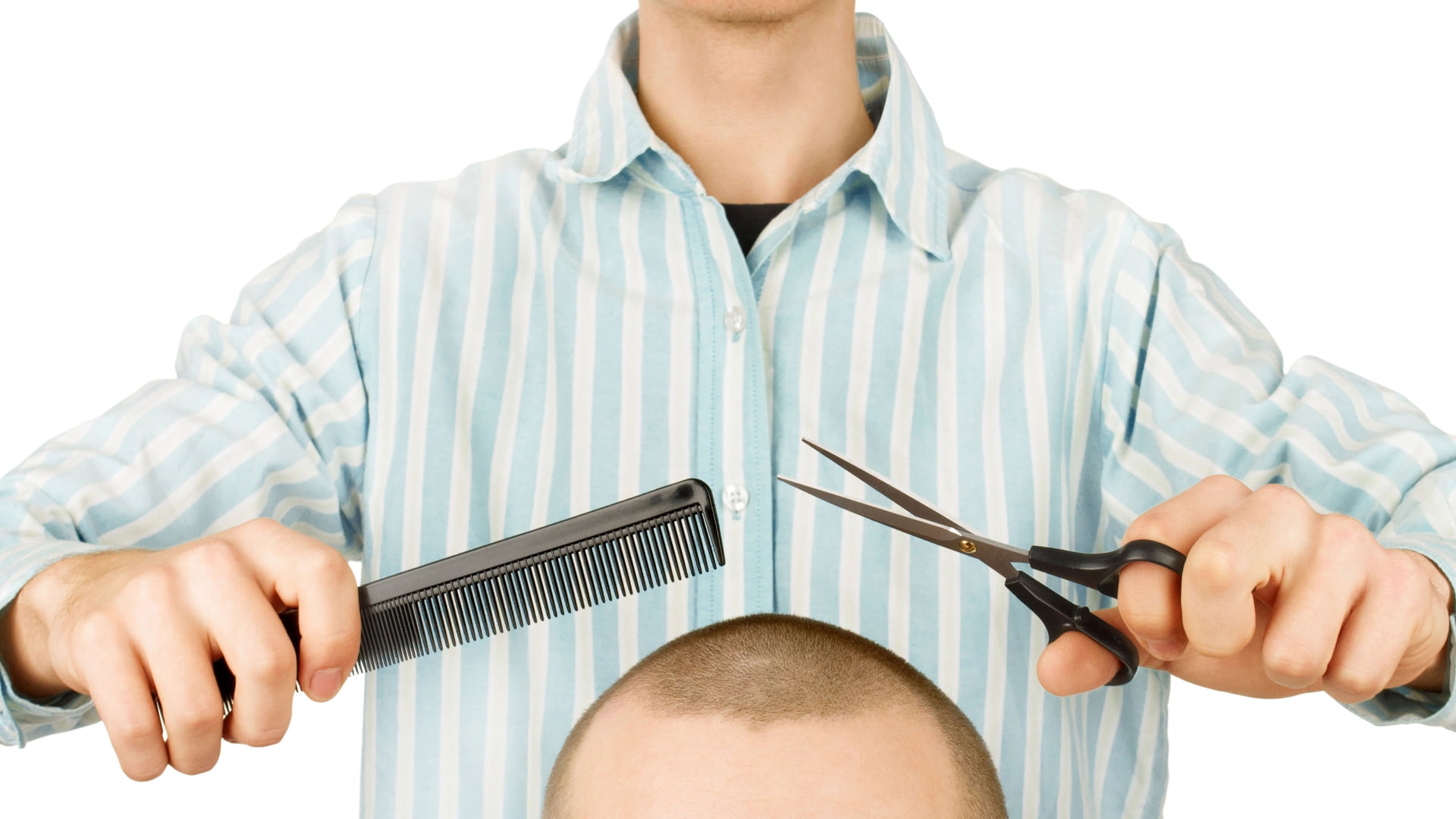
Haircut after hair transplant
After a hair transplant, many patients are eager to return to their usual hair care routine. However, when it is actually safe to cut your hair after a hair transplant depends on the healing phase and how you cut it.
Sticking to the right schedule is essential for protecting the grafts and ensuring the long-term success of the transplant. Even minor manipulations of the scalp, if done prematurely, can negatively affect the growth of new hair.
Why you should wait
First 7 days: Avoid touching the scalp
Grafts are extremely vulnerable during the first week after transplantation. Especially during the first two days, even a light touch or pull can cause them to detach. By the 6th day, they become more stable, and by around the 10th day, their attachment has strengthened significantly. Nevertheless, it is recommended to wait until the 14th day, when healing is complete to a satisfactory degree.
During the first 3 days, a new network of blood vessels begins to develop around each hair follicle, a process known as neovascularization, which continues for several days. This stage is crucial for the survival of the grafts, as even minor injury or pressure can interrupt the blood supply and cause permanent damage. Even if part of the hair follicle remains viable, the hair that grows later may be thinner or weaker.
In the following weeks, it is common to experience temporary loss of the transplanted hair, known as shock loss. This phenomenon usually occurs between the 2nd and 6th week and is a normal reaction of the body during the healing phase. The hair follicles remain alive under the skin and enter a new growth phase around the third month, when hair growth gradually begins to reappear.
By the third month, the grafts have already developed strong and stable roots, capable of withstanding normal pressure and manipulation of the scalp.
When you can safely cut your hair
Weeks 2-4: Cutting hair with scissors
Now you can carefully groom the back and sides of the head. This reduces the unevenness created as natural hair grows, while the transplanted area remains short. Cut only the ends and keep the scissors at least 5 millimeters away from the scalp, avoiding sudden movements or pressure. The donor area should remain untouched until healing is complete.
Weeks 4–8: Donor area haircut
It is now possible to trim the donor area very gently with scissors, but we recommend that you only do this with a hairdresser who understands post-transplant care.
Month 3: Clippers are permitted
The grafts have now formed stable and permanent bonds with the scalp. You can carefully use clippers, starting with attachment #4 (approximately 6 mm) or larger. As long as healing is progressing smoothly, you can gradually reduce the length in subsequent haircuts, always using gentle movements and avoiding pressure on the area.
Month 6 and beyond: Return to normal care
From this point on, you can return to styling without restrictions, as the transplanted hair has now stabilized and is growing normally.
At this stage, gentle combing with a soft brush or comb is also permitted, avoiding excessive pressure on the hair root. Styling products can be used in moderation, provided they are carefully removed during shampooing.
Signs that you can cut your hair
Before scheduling your first haircut, make sure that:
✓ All scabs have fallen off naturally, without you removing them with your hands.
✓ There are no areas of intense redness, heat, or sensitivity.
✓ New hair growth is visible in the transplanted areas.
✓ The donor area has healed completely and there are no sensitive spots.
Differences between scissors and clippers in the postoperative period
Scissors cut the hair above the scalp without coming into direct contact with the skin. They do not exert pressure or create vibrations, making them a safer option during the early stages of healing.
In contrast, clippers slide along the scalp, exerting pressure and transferring vibrations from the motor through the blade. Recently transplanted grafts are not yet stable enough to withstand this type of mechanical stress before the third month.
When clippers are permitted, avoid cutting the hair too short. Start with attachment #4, and if the first haircut goes smoothly, you can gradually move on to #3 for subsequent haircuts.
Tips for styling products and appliances at home
- Hair dryer: After the first two weeks, you can use a hair dryer on a very low heat setting. Start with cold air and, after a few days, use lukewarm air, always keeping the device at a safe distance from the scalp.
- Thermal styling: Avoid using thermal devices before the grafts are fully mature, as they cause mechanical traction, and high heat can damage the hair follicles.
- Chemical products: Opt for mild, ammonia-free dyes or natural products, such as henna, after six months. Before the 12-month maturation period is complete, it is recommended to avoid decolorizing, bleaching and perms, as they contain strong chemicals that can irritate the scalp.
- Razor: Although several clinics allow its use after six months, some studies suggest waiting until twelve months after surgery so that the grafts are fully established and all hair has matured.
- Shampoo: Before going to the hairdresser, wash your hair at home with the mild shampoo recommended by your doctor. Most hairdressers use products containing sulfates, heavy oils, or silicones for added volume, which weigh down the grafts.
Tip: Follow your surgeon’s instructions carefully. Each case is different, and your doctor will give you the most accurate timeline, taking into account how your scalp heals.
Practical tips for the hairdresser
Choosing a hairdresser is not an easy task. It is natural for most hairdressers to be unaware of the instructions following a hair transplant. When you schedule an appointment, inform them that you have had a hair transplant and that you need a haircut exclusively with scissors, without applying pressure to the areas that have undergone surgery.
Red flags: The hairdresser does not share your concerns about the transplant, rushes through the appointment, does not explain hygiene practices, and avoids using scissors.
Positive signs: They are willing to listen to the doctor’s instructions. The hairdresser asks detailed questions about the procedure, suggests conservative approaches without prompting you, and disinfects their tools in front of you.
Warning signs of complications
After a transplant or scalp treatment, like a haircut, watch for signs of infection or inflammation.
Notify your surgeon immediately if you notice:
- Rapid spread of redness or swelling
- Pus or unpleasant-smelling discharge
- Fever above 38°C accompanied by pain or tenderness in the scalp
- Severe or worsening pain that does not subside with painkillers
- Red streaks extend from the area of the operation.
In any such case, avoid any further manipulation, do not attempt to shave again and, if possible, take photographs to facilitate evaluation by your doctor.
What is important
An extra week of waiting has never ruined anyone’s results, but cutting your hair a week early has disappointed countless patients who wished they had waited.
Complete the process with the same care you took when you decided to have the transplant. The patience you show now will protect your results for decades.
Always prioritize your doctor’s instructions. Each patient heals at a different rate, and in some cases, a slight adjustment to the schedule may be necessary.
If you have questions or are unsure about the next step, contact Advanced Hair Clinics. The clinic’s doctors are always available to guide you responsibly and safely so that you can maintain the best possible results.
If you have any questions about your haircut or post-operative care, contact us today for an assessment. Call us from Greece at (+30) 210 6980451 and from Cyprus at (+357) 25251040, or leave your message below and we will get back to you as soon as possible.
Book an Appointment with Our Medical Team
Book an appointment at ADVANCED HAIR CLINICS for a diagnosis and find answers to your questions about hair transplantation.
Contact Form