
Hair Loss Diagnosis and Testing
reasons for visiting a dermatologist. It is not a disease per se, but a symptom that can be attributed to many factors, such as dietary habits, hormonal and metabolic disorders, autoimmune, inflammatory and hereditary causes.
The diagnosis of hair loss is based on a combination of clinical evaluation by a dermatologist and specialized laboratory tests, which allow the identification of the exact cause.
The tests differ from person to person and are selected individually, according to the needs of each case.
Clinical Examination of Hair Loss
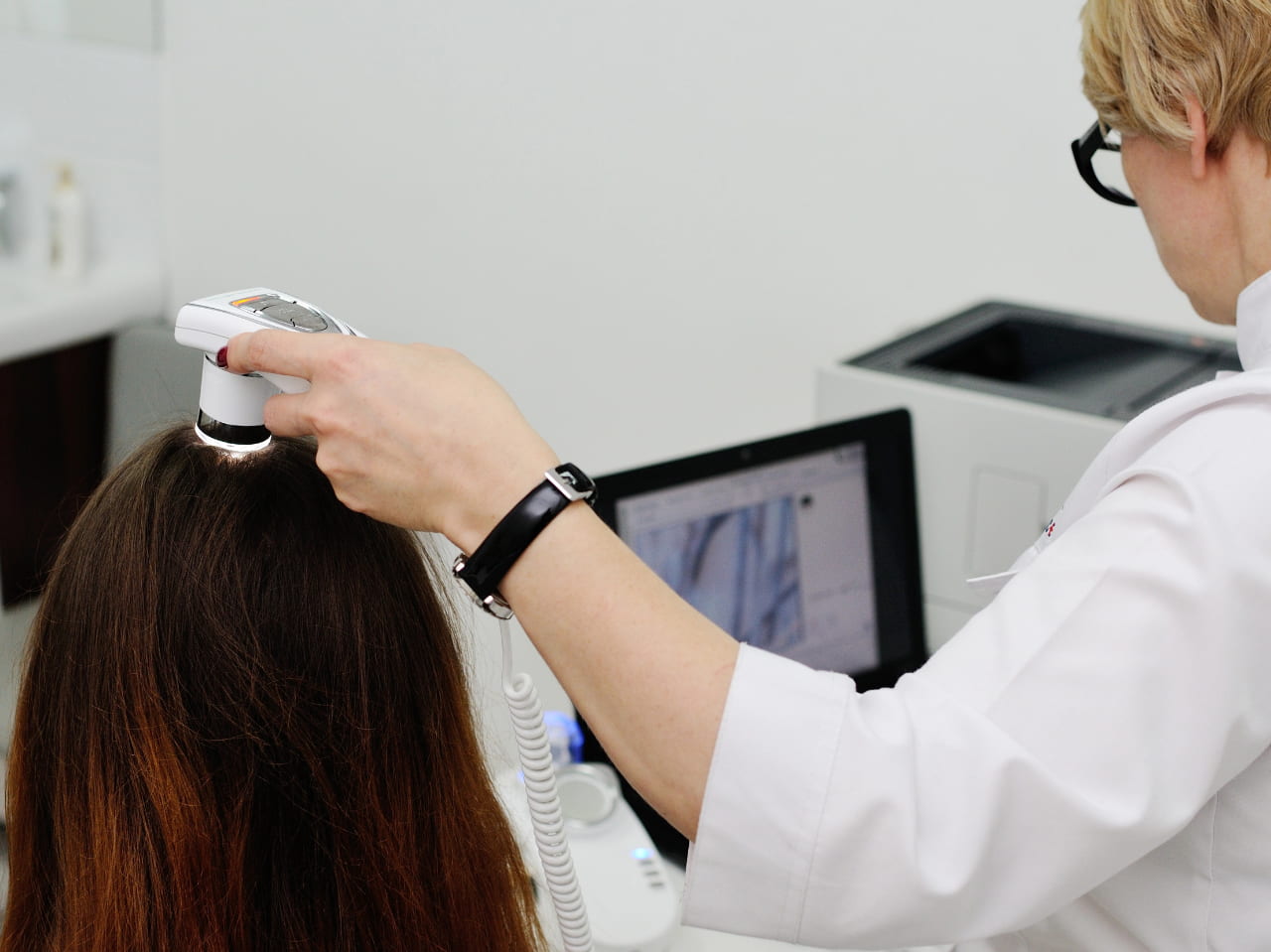
The diagnosis is not limited to simply recording hair loss, but includes investigating the mechanisms that cause it, in order to determine whether it is reversible, progressive or permanent. The examination by the dermatologist begins with the medical history and trichoscopy, with modern clinics using advanced diagnostic systems that combine techniques and medical expertise to analyze hair and scalp health with greater accuracy.
The medical history is the first and most essential diagnostic tool in the hands of the dermatologist. The accurate diagnosis of hair loss is largely guided by the information obtained during the clinical interview. The dermatologist examines when the loss started, how quickly it is progressing and whether it is localized or diffuse throughout the scalp. They also investigate possible associated complaints, such as redness, itching, pain or scaling, as well as recent potential triggering factors, such as stress, infection, pregnancy/childbirth, diet, medication or styling practices. At the same time, they evaluate any hormonal disorders and family history of alopecia.
Based on the patient’s answers, the dermatologist decides which tests will be needed to confirm or rule out the underlying cause.
Basic Hematological Tests
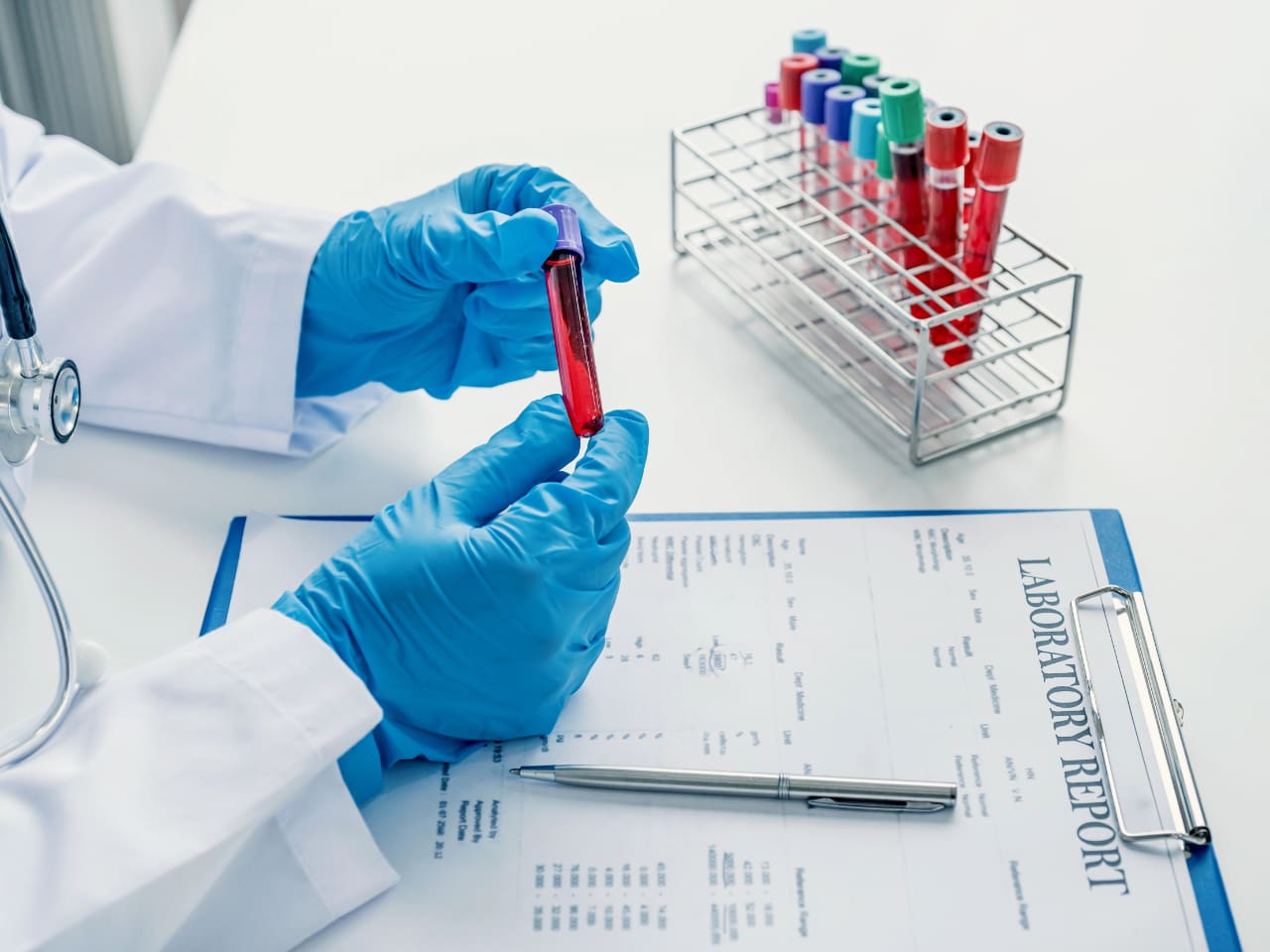
Hematological tests are an integral part of the hair loss evaluation. The dermatologist determines which are necessary depending on the history and clinical findings.
The complete blood count (CBC) is the basis of any initial investigation. Its most important contribution to the diagnosis of alopecia is the exclusion of anemia, which reduces oxygen transport to the hair follicles, hindering hair growth and leading to diffuse hair loss.
Hormonal Tests

Hormonal tests are done mainly through hematological tests and aim to investigate possible hormonal dysfunction, malabsorption or metabolic disorders.
Thyroid gland disorders are a recognized cause of hair loss, as its hormones regulate the life cycle and renewal of hair follicles. Both hypothyroidism and hyperthyroidism can cause diffuse hair loss or hair thinning.
Testing with measurement of TSH, FT4 and FT3 hormones is recommended in almost every new patient case, especially when there are symptoms such as fatigue, weight changes, mood swings or scalp dryness.
Tests for Rare Forms of Alopecia
These tests are used to investigate rare, inflammatory or autoimmune forms of alopecia, as well as cases where there are signs of systemic disease.
These tests are requested when there is suspicion of an inflammatory or autoimmune cause. Elevated CRP (C-reactive protein) or ESR (Erythrocyte Sedimentation Rate) values indicate active inflammation, while positive ANA (Antinuclear Antibodies) may indicate autoimmune diseases such as lupus erythematosus, which can lead to scarring, permanent hair loss.
Investigation is recommended when hair loss is accompanied by redness, scaling or pain on the scalp, as well as when general symptoms such as fatigue or arthralgia coexist.
The Importance of Differential Diagnosis
Differential diagnosis is essential for identifying the cause of hair loss and selecting appropriate treatment. Many conditions present with similar symptoms, so correlation of findings from clinical examination and laboratory analyses is required. For example, the distinction between androgenetic, telogen, alopecia areata or scarring alopecia is based on trichoscopy and phototrichogram, combined with hematological tests.
Of particular importance is the recognition of transient forms, such as postpartum telogen effluvium, hair loss after COVID-19 or after intense stress, which cause diffuse and reversible hair loss, so that they are not confused with other pathological forms of alopecia.
Folliculitis can also cause localized hair loss, which is often confused with other forms of alopecia. The diagnosis is based on clinical examination and trichoscopy, while in persistent cases microbiological culture may be required to identify the responsible microorganism.
Differentiation of Diagnosis by Gender
Tests for hair loss differ by gender, due to different thinning patterns and underlying causes.
- In men, hair loss usually presents with frontal hairline recession and thinning on the top of the head (androgenetic alopecia). The diagnosis is initially based mainly on the clinical picture and trichoscopy, with extensive laboratory testing of hormones being rarely required, unless there are unusual symptoms.
- In women, hair loss is more diffuse (general thinning) and often the cause is not only androgenetic alopecia. For this reason, almost always more extensive laboratory testing is required to investigate factors such as thyroid disorders, iron deficiency or hormonal imbalances.
Address Hair Loss with Proper Guidance
Hair loss is a problem that with proper diagnosis can be effectively treated. If you notice increased hair loss or changes in its density and structure, contact Advanced Hair Clinics for a diagnostic check and personalized treatment options that meet your needs. Call from Greece at (+30) 210 6980451 and from Cyprus at (+357) 25251040 or leave your message below and we will respond as soon as possible.
Book an Appointment with Our Medical Team
Book an appointment at ADVANCED HAIR CLINICS for a diagnosis and find answers to your questions about hair transplantation.
Contact Form