
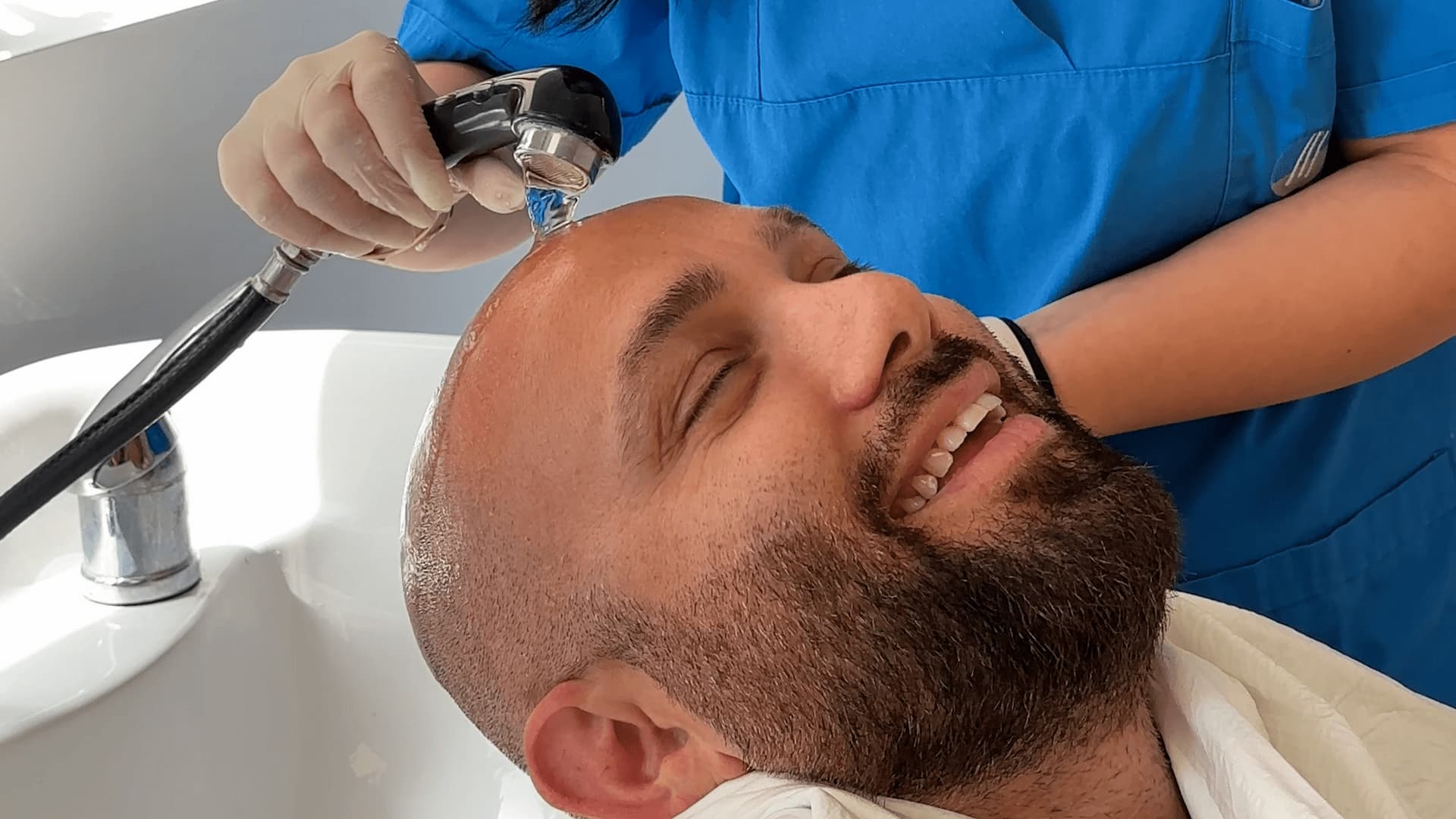
How to wash your hair properly after a hair transplant

Washing your hair after a hair transplant differs from your daily routine and requires special care. The grafts require time to stabilize in the skin, and the scalp will be quite sensitive for several weeks, particularly during the first week. When washing, it’s essential to know how to protect the area, reduce the risk of infection, ensure a smooth and quick recovery, and guarantee that the new grafts will grow healthy and strong.
When to do the first wash

On the day of the procedure, be careful not to wet or touch your head. On the second day, you’ll do your first wash. In most clinics, this is done at the medical facility, where specialized staff will show you the correct technique. If you do it at home, remember that your goal is not deep cleansing, but to keep the area clean, removing blood residue and secretions without disturbing the grafts. Use the special shampoo your doctor has prescribed, which is designed explicitly for the post-operative period. Rinse slowly, using a bowl filled with lukewarm water for better control over the flow.
Days 1-7: Washing with gentle movements
From the second to the seventh day, daily washing follows a specific methodology that ensures graft protection:
Use the shampoo provided by the clinic exclusively. If you don’t have it available for any reason, choose a neutral shampoo without fragrance, sulfates, and parabens. The shampoo’s pH should be neutral (around 7) to avoid irritating the sensitive skin.
Use a saline solution spray on the transplant area 20-30 minutes before washing. This preparation softens the scabs that have formed, facilitating their removal without trauma.
The water must be lukewarm—neither cold nor hot. The ideal temperature is approximately 35-37°C. Pour the water from a container or use the shower at very low pressure. Never let the water stream fall directly with force on the grafts, as the pressure can displace them.
In the recipient area, where the grafts have been placed, spread the shampoo foam with extremely gentle, almost imperceptible movements. Use only your fingertips, never your nails, and avoid any rubbing. The donor area, from where the grafts have been taken, heals faster, and you can wash it with slightly more normal movements, always remaining careful.
Drying is as essential as washing. Let your hair dry naturally or use sterile gauze or a clean, soft towel with light patting. Rubbing and using a hair dryer are prohibited at this stage.
Days 7-10: Scabs begin to detach
After the first week, you’ll notice that the scabs begin to detach naturally. This is a positive sign indicating that healing is progressing normally. Continue daily washing, but now you can apply slightly more intense circular movements with your fingertips. If you feel resistance when touching a scab, don’t insist—it will fall off on its own when ready.
If many scabs remain by day 10, contact your clinic for guidance. In some cases, a special lotion may be needed to facilitate their removal.
Days 10-14: Transition to more normal washing
From day ten, the skin has healed to a satisfactory degree, and the grafts have stabilized. You can now wash in a more normal way, applying a gentle massage with circular movements. The water pressure from the shower can be slightly increased, but remains at low levels.
Continue with gentle shampoo and avoid using hot water, as it can irritate the skin. Products with strong chemical ingredients remain prohibited.
After day 14: Return to normality
From the second week onwards, most patients gradually return to their usual care routine. Using a hair dryer is allowed at a low temperature and at a distance of at least 30 centimeters from the head. With your doctor’s approval, you can gradually reintroduce conditioner and mild styling products.
Products containing alcohol, strong chemicals, or hair dyes should be avoided for at least one month after the procedure. This allows the grafts sufficient time to integrate fully, ensuring the best possible result.
At this stage, if healing is progressing well, you can wash your hair twice a day if needed, especially if you sweat.
Activities that affect healing
To protect your results and ensure optimal graft growth, certain activities should be avoided during the first weeks:
Swimming in pools, the sea, or using saunas is prohibited for 3-4 weeks. Pool chlorine and sea salt can cause severe irritation to the sensitive scalp, while the high humidity and temperature of saunas create conditions that favor infections and slow healing.
Sun exposure should be avoided for at least 3 months. UV radiation can cause severe burns to the sensitive skin and irreversibly damage the new grafts. From day 4, you can wear a loose hat that doesn’t apply pressure, preferably made from natural materials that allow the skin to breathe.
Intense exercise that causes sweating should be avoided for the first 3 weeks. Sweat creates ideal conditions for bacterial growth, significantly increasing the risk of infection. Gentle exercises, such as walking, are allowed after the first week.
Helmets, tight hats, or other accessories that apply pressure or friction to the scalp are prohibited until all scabs have gone and initial healing is complete.
Styling products, such as gel, wax, or spray, should be avoided for at least 2 weeks. Hair dyes and alcohol-based products are prohibited for 4-6 weeks, as chemicals can damage the sensitive follicles and disrupt new hair growth.
When to worry and contact your doctor
Although healing usually progresses smoothly, some signs require immediate medical evaluation:
- Injury to the area during washing or other activities
- Intense redness that worsens instead of subsiding
- Appearance of fluid or pus in the transplant area
- Pain that doesn’t respond to usual painkillers
- Scabs that remain for more than 12-14 days
- Swelling that extends beyond the expected area
- Fever or general malaise
Frequently Asked Questions
Contact us
At Advanced Hair Clinics, your care doesn’t end with the completion of the procedure. With high expertise and years of experience in hair transplantation, we provide continuous support and guidance throughout the entire restoration process. From day one to the final result, we’re by your side to ensure you achieve the best possible outcome.
Our personalized approach and attention to detail ensure that you’ll regain natural, healthy, and dense hair, boosting your confidence. For more information or to schedule an evaluation appointment, contact us today. Call us from Greece at (+30) 210 6980451 or from Cyprus at (+357) 25251040, or leave a message below, and we’ll respond as soon as possible.
Book an Appointment with Our Medical Team
Book an appointment at ADVANCED HAIR CLINICS for a diagnosis and find answers to your questions about hair transplantation.
Contact Form